

I don’t generally spend much time, these days, reading about parenting styles. My kids have grown up and left home, at least for the time being, and my cat, Roscoe, resists any kind of parenting suggestions.
So I can’t explain why I happened to be reading an article about animals as parents, on the CNBC website. The CNBC website has a “Make It” section where they post stories about retirement and investments and various other ways to “Make It”…
…which we can interpret as: stories aimed at those of us generally subscribing to the philosophy, “Fake It ’til You Make it.”
If we had already “Made It” we wouldn’t be reading CNBC. More likely, Forbes or Wall Street Journal.
Anyway, the article that for whatever reason caught my attention, was, “The No. 1 parenting style for raising ‘healthy, resilient’ kids”, written by Dr. Jean M. Twenge, a professor of psychology at San Diego State University .
She writes:
Imagine being 10 years old and telling your parents: “I want a $1,000 gadget, plus $40 every month to keep it. It’ll let me chat with friends and adults I’ve never met all day long. And by the way, I’ll never look up from it again.”
They would have said no.
Actually, a lot of parents have said, “Sure. Why not? It’ll keep you distracted and quiet, and I won’t need to engage with you, except occasionally when you run out of Red Vines.”
Ms. Twenge agrees with me when I say that. Most parents are surrendering to the smart phone culture, and sticking highly-addictive devices into the hands of their previously-innocent children.
Okay, yes, I did that with my kids. I confess. It was so easy to do. I could get a used phone, online, for a couple hundred bucks, and with a family plan, the kids could be on their phones for hours and hours without really costing very much extra.
But animals don’t typically do this with their offspring.
Dr. Twenge tells us that psychologists often break down parenting styles like this… To make them easier to remember, she pairs them with sea animals…
- Fish parenting: Provide basic needs, then swim away. No rules, no affection. Kids are largely on their own.
- Sea Sponge parenting: Soft and nurturing, but with no backbone. These parents rarely set boundaries. “Gentle parenting” often falls here — lots of love, little structure.
- Tiger Shark parenting: Strict rules, harsh punishments, little warmth. Think: “Because I said so.” Kids obey, but often resent it.
- Dolphin parenting: A balance of affection and boundaries. Firm but flexible. Rules are explained, not barked out.
She claims that decades of research make it clear: Dolphin parenting “produces the healthiest, most resilient kids.”
Just to be clear. Dolphins are not “fish” — they are mammals — and they don’t treat their kids the way fish treat their kids. If they did, they would be “Fish parents.” But they aren’t.
Here’s a photo of a ‘discus fish’ with her babies. Notice the blank expression on the mother’s face. This is a normal reaction to having 19 children all born at the same time.
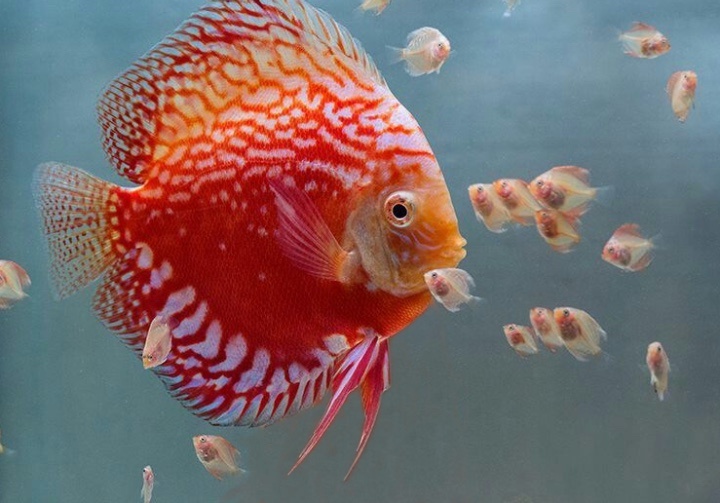
We can easily understand why “Fish parents” only provide the basic needs and then swim away. And we don’t blame them.
We might be confused by Dr. Twenge’s suggestion that some parents act as “Sea Sponges”. I admit I was confused. I’ve never thought of sea sponges as particularly “loving” parents. In fact, my research suggests that sea sponges don’t have hearts, or brains.
I’ve met many human parents who don’t seem to have hearts or brains, but I would never say that to their face.
Sponges live in the same spot for their entire lives, sort of like a plant, but they are not plants. They’re animals without hearts or brains. Some humans live in the same spot for their entire lives, except for maybe four years, getting a college degree somewhere. Then they have kids, and become like sponges. And we don’t blame them.
I feel like there’s a ‘theme’ developing here, about not blaming parents for their style of parenting. But I think we are safe blaming “Tiger Shark parents”, for being excessively controlling, and punishing their kids for the slightest infraction. Someone needs to take the blame for the way the world has turned out, and “Tiger Shark parents” are the most likely candidate.
Then we come to the lucky children who have “Dolphin parents” and wind up healthy and resilient.
Of course, dolphins aren’t tempted to give their kids smart phones. Smart phones don’t work underwater. So dolphins have that advantage over us, right from the git-go.
But we can act like dolphin parents.
You’re not just raising kids. You’re raising future adults. Dolphin parenting — firm, flexible, affectionate, and consistent — gives them the best chance to grow into healthy, independent people in a high-tech world.
It would have been so easy to be a dolphin parent, if only my own parents had been dolphins. The only drawback is, I would have flippers instead of hands, and I wouldn’t be able to type.
I don’t think dolphins would give their kids smartphones, even if they did work underwater.
Underrated writer Louis Cannon grew up in the vast American West, although his ex-wife, given the slightest opportunity, will deny that he ever grew up at all. You can read more stories on his Substack account.