
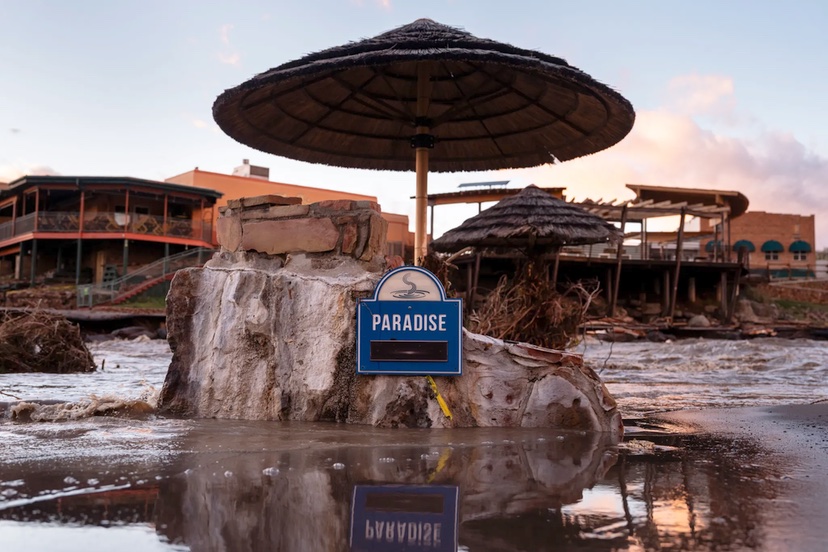
A sign reading “PARADISE” marks a hot spring pool submerged in mud at Pagosa Hot Springs Resort on Monday. The resort runs to the edge of the San Juan River. Courtesy Cheney Orr, The Colorado Sun via Report for America.
We’ll be discussing, later on, the question I posed at the end of Part One: How much water… do we need?
Because we need water. We don’t always agree on how much we need. And we can’t always control how much we get.
But first, a quick summary of a lengthy work session held by the Archuleta Board of County Commissioners yesterday. The commissioners and staff had much to talk about, related to the two back-to-back 100-year flood events experienced by the community over the past three weeks.
We are still experiencing the effects, and will be for many months, perhaps years.
“We have to stop the bleeding before we ever worry about the broken arm…”
That a comment by County Commissioner Warren Brown was quoted in a fairly comprehensive article about Pagosa’s flood events in the online Colorado Sun website, written by Shannon Mullane and Olivia Prentzel with photography by Cheney Orr, published on November 8.
Which part of Pagosa’s recovery involves “bleeding” and which part is “the broken arm” is not immediately clear.
Yesterday’s work session at the County Administration Building focused, as we might expect, on the recovery efforts to both stop the bleeding and repair the fractures. The session began with County Public Works Director Mike Torres summarizing the work the Road & Bridge Department is currently engaged in. He estimated that there’s about 50 miles of “impassable roads” within the county. I wasn’t sure if he meant “50 miles including state and federal highways” or if he meant “50 miles for which Archuleta County itself is responsible.” I assume he meant the latter.
The initial work by the County road crews has been focused on providing access for stranded residents, he explained, and will be for the time being. Folks with “bad but passable roads” will need to be patient.
He noted, as part of his report, that some private companies have heavy equipment located in areas currently inaccessible to County crews, but in order to enlist help from those companies, the County needs well-written contracts that outline the work to be performed and the expected cost.
The Southern Ute Tribe has been working closely with the County crews, especially in Arboles, he explained. Ditto, PAWSD.
“It’s been pretty awesome to see our community come together and help each other out.
“With that being said, most of the funding we hope to receive, hasn’t been funded yet. We don’t know for sure if we’re going to get anything.
“So right now, we’re treating that as if we’re going to get nothing. And we’re only doing what we can, with what we have.”
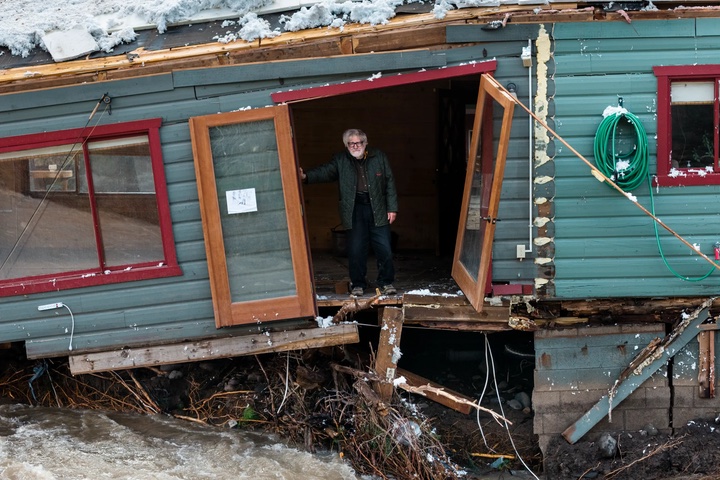
The state of Colorado provided some emergency funding following two 2025 flood events, but no funding came to Archuleta County from the Federal Emergency Management Administration (FEMA) last year.
Commissioner John Ranson noted that the County will likely move $1 million out of reserves into the Road & Bridge fund, to assist with expenses. “I feel that we’re going to get some [funding] help,” he said. “But until such time, you do need the resources…”
One of the issues facing Road & Bridge is finding gravel to make the repairs. Mr. Torres noted that WW Clyde, the contractor working on the highway reconstruction in downtown Pagosa may be able to provide some material, since their project has been delayed. He also mention rock that became available in the Upper Blanco.
Later in the meeting, the commissioners and staff discussed an appeal sent to the state of Colorado, asking that the County be allowed to open several “emergency” gravel pits on private and federal lands, without going through the normal permitting process.
I got the impression that some of the potential gravel sites are located down CR 500 — Trujillo Road. Ten years ago, a gravel pit had been proposed down Trujillo Road, and angry community members turned out in large numbers to oppose the approval based on the number of large trucks that would be driving through residential neighborhoods. The BOCC ended up rejecting the application. You can read that story here.
A similar successful protest movement arose in 2022 when a gravel pit was proposed near Lake Hatcher. The proposed site was eventually purchased by a wealthy family, to prevent the gravel pit.
I can think of at least two other recent instances of proposed gravel pits being stymied by angry neighbors.
One result of those protests: Archuleta County pays approximately double the cost per ton for its gravel, due to the cost of trucking from distant locations.
Commissioner Ranson addressed a comment to Mr. Torres:
“I know we’ve had conversations of many fronts, and gravel is a big one. And I appreciate you attending all those meetings, and I want the public to know — I think we’ve made significant progress in standing up some gravel pits ASAP.
“And very significant phone calls with the Forest Service, and they want to help.”
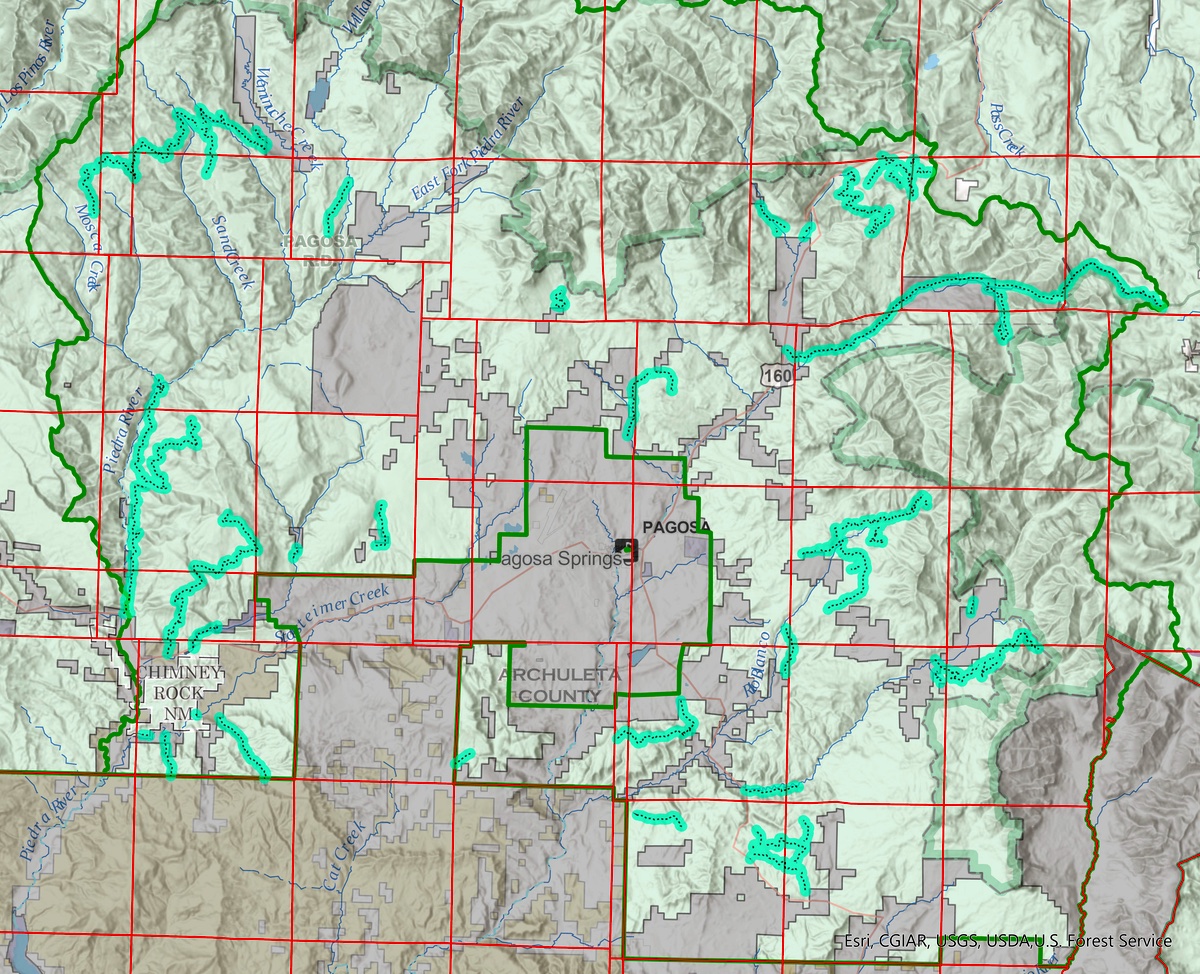
The San Juan National Forest is facing its own massive road reconstruction project. Here’s a map of roads near Pagosa Springs impacted by the recent flood events, indicated with teal highlights. How much gravel will be needed? We don’t know.
Too much water, and too little money. Do these two problems go hand-in-hand?
Meanwhile, there’s a totally different “too much water and too little money” problem that’s been plaguing Archuleta County for nearly 20 years.
We’ll begin digging into that issue starting tomorrow.
Read Part Three… tomorrow…
Bill Hudson began sharing his opinions in the Pagosa Daily Post in 2004 and can't seem to break the habit. He claims that, in Pagosa Springs, opinions are like pickup trucks: everybody has one.