
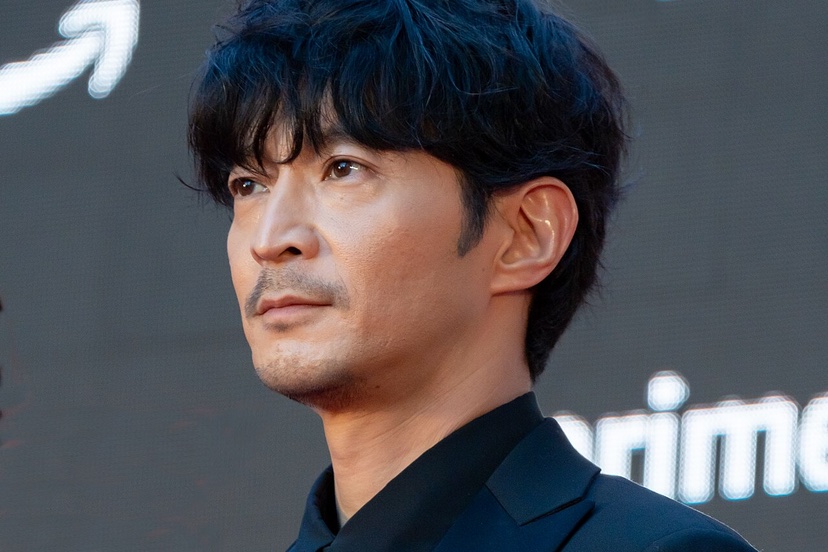
Kenjiro Tsuda at the 36th Tokyo International Film Festival in October 2023.
“The human voice is symbolic of individual personality, just like one’s portrait,” Presiding Judge Aya Takahashi said, according to a court document seen by The Associated Press…
— from “Tokyo court grants legal protection to human voices in AI clone case” by Mari Yamaguchi, Associated Press, October 1, 2026.
I remember the first time I heard a recording of my own voice, and thinking, “Oh my god, is that how I sound to other people?”
Probably helps explain why I picked a career where I can write my stories, without anyone hearing my voice. No one would take me seriously, if I shared my stories verbally.
Not that anyone takes me seriously anyway, but you get what I mean.
The Japanese actor Kenjiro Tsuda, however, takes his voice seriously. As well he might. According to Wikipedia, his voice has been featured in at least 900 productions… most famously as ‘anime’ characters, in films, on TV, and in video games. He’s also acted on the stage.
He’s perhaps best known (by those who know) as the voice of ‘Kento Nanami’ from the popular anime TV series, Jujutsu Kaisen.

Earlier this year, Mr. Tsuda went to court demanding that TikTok close an account over its unauthorized use of an ‘artificial intelligence clone’ of his trademark baritone voice, which has been described as “lustrous and deep”.
Basically, the kind of voice I wish I had. But, alas.
In the lawsuit, Mr. Tsuda claimed that the anonymous operator of the TikTok account “Nanami” wrongfully profited by attracting viewers with his voice narrating in more than 180 videos about urban legends and paranormal phenomena. He asked for the material to be deleted.
From last week’s AP article:
As of November 2025, the [TikTok] account had more than 200,000 subscribers, with viewers often noting the similarities between the narrator’s voice and Tsuda’s. The defendant argued that the videos used an AI-generated voice that sounded like Tsuda’s but was not his, and that the videos did not damage the actor’s reputation as a voice actor.
Apparently, Presiding Judge Aya Takahashi did not agree with the defendant, and ruled that “The human voice is symbolic of individual personality, just like one’s portrait…” But of course the ruling was in Japanese, so I’m just repeating what reporter Mari Yamaguchi wrote in her October 1 AP article.
The ruling dismissed Mr. Tsuda’s demand that all the videos using his voice be deleted, because the account had already been closed.
The decision comes at a time when Japanese voice actors are concerned about the AI cloning of their trademark voices. Most of us don’t have concern, of course. Be grateful for small favors!
Ms. Yamaguchi wrote in her AP article:
Last year, Oscar-winning actors Michael Caine and Matthew McConaughey made deals with voice-cloning company ElevenLabs to allow its AI technology to replicate their voices.
First it’s your voice, then it’s your face, then it’s your entire body and personality.
I can see where this is headed, in the U.S.
But maybe not in Japan?
Anyway, I’m going to stick to writing my stories. That way, no one can clone my voice. Not that they’d want to, but you get what I mean.
Underrated writer Louis Cannon grew up in the vast American West, although his ex-wife, given the slightest opportunity, will deny that he ever grew up at all. You can read more stories on his Substack account.