
This story by Jacob Fischler appeared on Colorado Newsline on September 14, 2026.
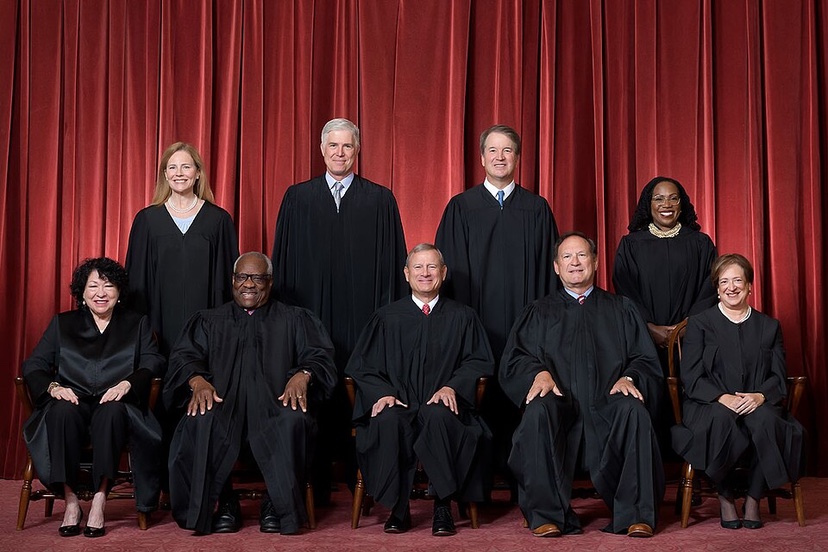
The U.S. Supreme Court on Monday kept in place a lower court’s order blocking President Donald Trump’s embattled plan to place new restrictions on mail ballots for this year’s midterm elections.
The unsigned, one-paragraph order upheld a Massachusetts federal court’s injunction on a U.S. Postal Service rule until after Nov. 3 and did not decide whether the rule itself was lawful. But a majority of the court said the Democratic state officials and voting rights groups challenging the rule were likely to succeed.
Two of the court’s stalwart conservatives, Justices Clarence Thomas and Samuel Alito, dissented from the decision. Alito wrote that the Postal Service has “broad authority to regulate the mail” and that at this preliminary stage of the suit challenging the rule, its policy should remain in place.
“I express no view on whether the Government would be likely to succeed on de novo review of the Postal Service’s powers,” he wrote. “But for now, the Government has satisfied its burden of making a strong showing that the plaintiff States’ … claim is not likely to succeed.”
In a brief concurrence, Justice Brett Kavanaugh said the rule, which codifies technical requirements on the envelopes carrying ballots and requires states to collect and send to the federal government lists of eligible voters, may be legal, but was unworkable for the midterm elections 50 days away.
“There is at least a fair prospect that the final rule falls within the Postal Service’s statutory authority,” he wrote. “But applying the rule in the 2026 elections would be arbitrary and capricious … because state and local election officials do not have sufficient time to reasonably implement the rule before the elections.”
The rule’s challengers argued, in part, that the regulations would be impossible to install ahead of Election Day. Several election administrators, pro-democracy groups and others declared to the court that they agreed with that argument.
The Postal Service did not bring any evidence against those claims.
Democrats and voting rights advocates also argued the rule was illegal and unconstitutional. The executive branch has virtually no role in elections administration, which is a state responsibility with congressional oversight under the U.S. Constitution, they said.
The case, tried before President Barack Obama appointee U.S. District Judge Indira Talwani, will continue to evaluate the legality of the rule for future elections.
Challengers react
The groups and officials challenging the rule, as well as other Democrats, hailed the ruling in statements.
“Today’s order from our nation’s highest court makes clear that states cannot be forced to undermine their mail voting systems and risk voter disenfranchisement because of the President’s political agenda,” Massachusetts Attorney General Joy Campbell said. “Mail voting is safe, secure, and reliable, and I will continue to stand up for Massachusetts residents who rely on mail ballots to ensure that they can have their voices heard in the November election.”
Virginia Kase Solomón, the president and CEO of Common Cause, one of the groups suing to block the rule, called the decision “a major win for the millions of everyday Americans,” including elderly and rural voters, and those with disabilities, who depend on vote-by-mail.
“This executive order was a blatant power grab designed to silence voters and undermine our elections, but it failed because the people and the law were on our side,” she said in a statement. “Our Constitution is clear: states run our elections, and voters choose their leaders—not the other way around. No administration can strip the people of their power.”
California Gov. Gavin Newsom, whose state was the lead plaintiff in the case, said the rule was part of Trump’s “attacks on democracy” for the past 20 months.
“California stood up for democracy and we won,” Newsom wrote on social media. “Today is a good day for democracy, the rule of law, and the American people looking to exercise their Constitutional right to vote.”
Phil Weiser, Colorado’s attorney general and Democratic nominee for governor, said the court “just sent the message that President Trump and the Postal Service need to stay the hell away from our elections.”
California and Colorado are among the eight states that send ballots to every registered voter.
Spokespeople for the White House, Postal Service and U.S. Department of Justice, which represented the administration in the case, did not respond to emails seeking comment late Monday.
In the hour following the ruling, Trump posted on his social media platform in opposition to slowing artificial intelligence development, the poor condition of the Kennedy Center for the Performing Arts building and his promise to send every voter $5,000 if Republicans win the upcoming midterms, but did not address the ruling.
Colorado Newsline is part of States Newsroom, a nonprofit news network supported by grants and a coalition of donors as a 501c(3) public charity. Colorado Newsline maintains editorial independence. Contact Editor Quentin Young for questions: info@coloradonewsline.com.