
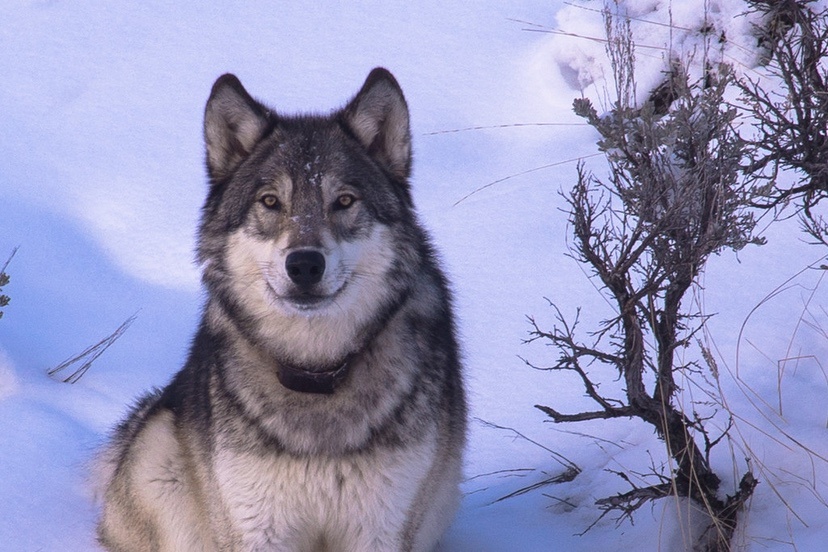
The death of female gray wolf 2504 should concern every Coloradan who values wildlife conservation, government accountability, and the integrity of Colorado’s wolf restoration program.
According to Colorado Parks and Wildlife (CPW), wolf 2504, a federally and state-protected endangered gray wolf, was shot and killed by a licensed hunter who reportedly mistook her for a coyote. Because the hunter voluntarily reported the shooting and cooperated with investigators, CPW elected not to pursue additional penalties.
While cooperation with law enforcement is commendable, the outcome raises a difficult but necessary question: What level of accountability exists when an endangered animal can be legally protected one moment and dead the next due to a claim of mistaken identity?
As a member of Colorado’s Wolf Stakeholder Advisory Group (SAG), I spent months working alongside ranchers, conservationists, hunters, wildlife professionals, and agricultural representatives to help shape Colorado’s Wolf Restoration and Management Plan. Our group did not agree on everything. In fact, we often approached issues from very different perspectives. Yet we shared a common goal: creating a framework that would give wolf restoration its best chance of success while balancing the interests of the people affected by it.
That process required hundreds of hours of discussion, compromise, and careful planning. Coloradans invested significant public resources into restoring wolves to the landscape. The expectation was clear: endangered wolves would be protected as the population gradually reestablishes itself in our state.
That promise is called into question when the unlawful killing of a protected wolf is treated primarily as an unfortunate mistake.
The issue extends beyond the loss of a single animal. Wildlife regulations across North America have long been based on a straightforward principle: hunters are responsible for positively identifying their target before pulling the trigger. Whether hunting waterfowl, big game, or predators, uncertainty is not supposed to justify a shot.
If a hunter mistakenly kills a species they are not authorized to harvest, consequences typically follow regardless of intent. The standard exists for a reason. Wildlife cannot be protected if mistakes carry little deterrent effect.
In the case of wolf 2504, the concern is even greater because reports indicate the animal was wearing a radio collar. Reasonable people can debate the circumstances surrounding the shooting, but the presence of a collar naturally leads many Coloradans to wonder whether sufficient care was taken to identify the target before the trigger was pulled.
The precedent established by this decision may be just as troubling as the incident itself.
When enforcement agencies publicly accept mistaken identity as the primary explanation for the death of a protected wolf without meaningful consequences, they risk creating a loophole that could be exploited in future cases. If every unlawfully killed wolf can potentially be explained away with “I thought it was a coyote,” then the effectiveness of endangered species protections becomes increasingly difficult to defend.
Unfortunately, concerns about this precedent are not merely theoretical.
In online forums and social media groups dedicated to tracking Colorado’s wolf reintroduction effort, some individuals have openly discussed the case in ways that suggest they view it as a roadmap for avoiding consequences. Comments celebrating the relatively minor outcome or encouraging others to use the same explanation should alarm anyone who cares about lawful wildlife management, regardless of their position on wolf restoration.
Colorado’s wildlife policies should never create incentives for bad actors to test the limits of enforcement.
This is not an argument against hunting. Colorado has a long and proud hunting tradition, and many hunters have been among the strongest advocates for ethical wildlife stewardship. Responsible hunters understand the importance of proper identification and recognize that conservation depends on adherence to regulations.
Rather, this is an argument for ensuring that protections for endangered species carry meaningful weight.
Colorado Parks and Wildlife should take this opportunity to reassess its policies regarding wolf identification, hunter education, and penalties associated with the unlawful killing of protected wolves. Additional education programs could help hunters better distinguish wolves from coyotes. Enhanced awareness campaigns could highlight the presence of wolves in areas where encounters may occur. Most importantly, enforcement policies should reinforce the principle that positive identification is a fundamental requirement of responsible hunting.
The long-term success of wolf restoration depends on more than relocation efforts, monitoring programs, or management plans. It depends on public confidence that the laws designed to protect endangered wildlife will be consistently enforced.
Coloradans were assured that reintroduced wolves would be safeguarded during the recovery process. Maintaining that trust requires more than words. It requires accountability when preventable losses occur.
The death of wolf 2504 cannot be undone. But Colorado can learn from it.
If we are serious about restoring wolves to our landscape, we must also be serious about protecting them. Otherwise, the promise of wolf recovery risks becoming little more than a promise on paper.
Darlene M. Kobobel
Founder, Colorado Wolf and Wildlife Center