
This op-ed by Quentin Young, appeared on Colorado Newsline on April 16, 2026.
Colorado incarcerates people at a higher rate than Russia, Iran and China.
According to the most recent figures from the Prison Policy Initiative, 556 of every 100,000 people in Colorado are locked up. That’s compared to 300 in Russia, 228 in Iran and 165 in China, all deeply repressive countries that Americans like to imagine are less free than the U.S.
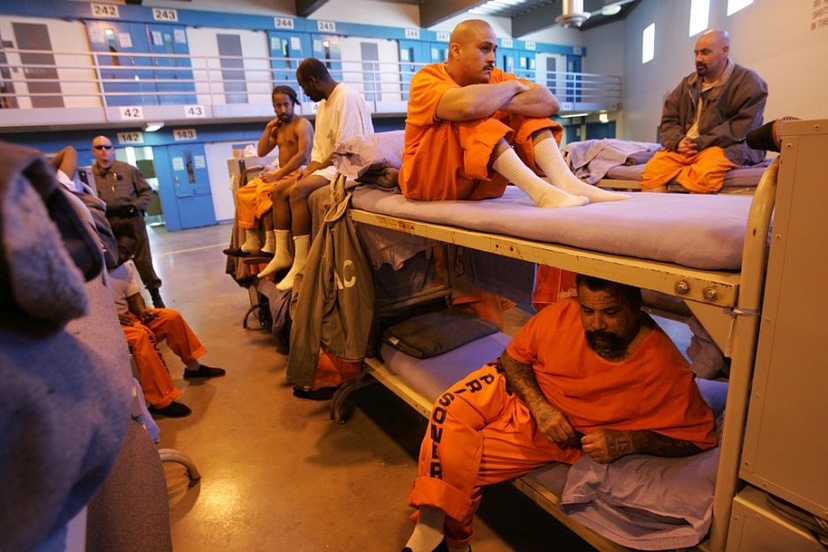
In August, the state prison inmate population exceeded 18,000 people, straining a system unequipped for that kind of demand. Prison growth is a source of deep pain in the debate over the state budget underway in the Colorado Legislature, where lawmakers are being asked to fund more prisons even as they’re forced to cut crucial services to address a $1.5 billion shortfall.
Prison expansion is also a moral wound. Just societies don’t cage their members at high rates. Instead of locking up ever more Coloradans, state lawmakers should put more resources toward crime prevention.
The state budget would benefit, and so would the state’s conscience.
Colorado is an outlier as compared to other countries but not to other states, most of which have similarly high incarceration rates. The U.S. as a whole puts 614 out of every 100,000 people behind bars. Only three other countries have higher rates: El Salvador, Cuba and Rwanda. But Colorado is not obliged to reinforce the bad example of the country. It can follow the lead of states like Massachusetts, which has found ways to dramatically reduce the number of people who are locked up.
Signs of serious trouble emerged in August, when the Colorado prison population rose above 97% capacity for more than 30 days. When that threshold was crossed, it triggered for the first time a 2018 state law under which corrections officials are required to take emergency steps to reduce the prison population.
Despite the law’s intent, the state is heading in the opposite direction, preparing to incarcerate hundreds more people. Gov. Jared Polis last month told lawmakers that the state has to open, on an emergency basis, at least one new prison, as the inmate population balloons.
The news came during a legislative session dominated by deep cuts to state services. In fact, the Colorado Department of Corrections is a rare part of state government expected to see a funding increase in the next fiscal year. The draft state budget calls for $69 million more for Corrections, and that’s second only to the department that oversees Medicaid among agencies expecting increases.
Expanding prisons are costly not only in state treasure but also in moral standing. A society’s incarceration rate is directly proportional to its failure, whether through mismanagement, neglect or cruelty, to support its members.
The social costs of mass incarceration are staggering. Black and Latino residents are historically over-represented in Colorado’s prisons while white residents are underrepresented. When the state puts someone in prison, negative impacts ripple through the community.
“Mass incarceration exacerbates poverty and inequality, holding back millions of men and women,” according to the Brennan Center for Justice. People the state incarcerates “face discrimination in the hiring process, earn lower wages, have weaker social networks, and experience less upward economic mobility than those who are never incarcerated. And they aren’t the only ones to shoulder these burdens: Their families and communities suffer as well, and the effect reverberates across generations.”
Polis argues Colorado has little choice but to open a new prison, since the state has a responsibility to incarcerate people whom courts sentence. That’s true, but it should only motivate state leaders to also enact policies that would reduce the need for prisons.
The real emergency is not that state prisons are at capacity, it’s that the dynamics of Colorado society result in so many residents entering the prison system in the first place. The state is looking to spend $200 million on a new prison, but the same amount could help reduce the need for one if it went toward programs that divert people from incarceration. For example, Denver’s landmark STAR program, in which teams of mental health professionals and paramedics go out on eligible 911 calls instead of police, has proved very successful in reducing arrests. But the teams can’t keep up with demand, and their funding has been reduced since last year. That’s a societal own-goal.
More state support for mental health care, job training, substance abuse recovery, equitable housing, and education for every community member would be a sure-bet investment for long-term success that involves fewer prison beds. Experts attribute the turnaround in Massachusetts largely to crime prevention, treatment programs and support for inmates reentering society.
“My perspective, we should have the smallest correctional footprint possible,” Andrew Peck, Massachusetts undersecretary of public safety, said in a 2024 interview. “If we have to incarcerate someone, they should be the right person. So I think that’s one thing that Massachusetts has gotten right…
“As opposed to a lot of other states.”
Colorado is one of those other states, but officials should change course so it isn’t.
Colorado Newsline is part of States Newsroom, a nonprofit news network supported by grants and a coalition of donors as a 501c(3) public charity. Colorado Newsline maintains editorial independence. Contact Editor Quentin Young for questions: info@coloradonewsline.com.
Colorado Newsline is part of States Newsroom, a nonprofit news network supported by grants and a coalition of donors as a 501c(3) public charity. Colorado Newsline maintains editorial independence. Contact Editor Quentin Young for questions: info@coloradonewsline.com.