
“Over the last 150 years in the United States, we have chosen cheapness at the expense of environmental quality…”
— Louis Wertz quoted by ProPublica in December 2025.
I found this to be an interesting quote. Considering that Colorado — where I live — will be celebrating its 150th anniversary of statehood this year.
It’s completely possible that, prior to 1876, the people of the United States did not choose cheapness, and only started choosing cheapness in 1876. But I kinda find that hard to believe.
Mr. Wertz is the Communications Director for the Western Land Alliance — or at least, he was in December, before he was quoted by ProPublica in an article about the gaping administrative holes in our federal government’s livestock grazing policies.
According to their website, the Western Land Alliance envisions a future “in which private and leased public lands in the West are resilient to stressors, healthy and biologically diverse, and provide for prosperous rural business and critical ecological services.”
My hat is off to the group. “Rural business” has not traditionally been “prosperous business.” Rural business means that you’re living far away from anything that could be considered “prosperous.”
In fact, those of us who write for the Pagosa Daily Post understand that it’s a rural business, and we could easily to hold it up as a prime example of the very opposite of a prosperous business.
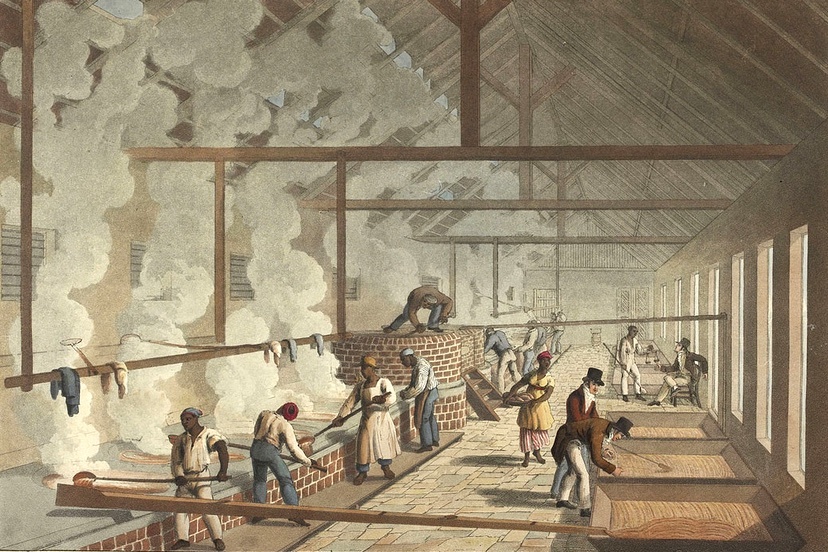
And one of the key elements of cheapness? Low wage labor. Ask me how I know.
Based on what little I know about prosperous businesses, it seems to me that a “prosperous business” produces something unique, and therefore uniquely valuable.
The things that rural businesses typically produce — like milk, and eggs, and rutabagas — can hardly be considered “unique”.
Practically speaking, if you’ve seen one rutabaga, you’ve seen them all.
Surprisingly, eggs recently moved out of the “cheap” category, thanks to the avian flu. Just goes to show how profitable a highly contagious disease can be. But we knew that already, from the COVID disaster.
And of course, there’s “cheap” and there’s “cheap”. Last year, for example, I bought a cheap inkjet printer. Cheap in both senses of the word. Didn’t cost much… and stopped making decent prints after about two months. Presumably, the manufacturer employed cheap labor, and used cheap materials.
A person might see that pattern as the very definition of capitalism. Pay the lowest wage possible, use the cheapest materials possible, and sell for the highest price possible.
That strategy worked out well for American toymaker ‘Funko’ for a dozen years. The company made decorative vinyl dolls based on celebrated characters from movie franchises like Star Wars, Marvel, Disney and Pixar. The dolls were manufactured in China where labor was once cheap, but not so much these days.
By 2023, the company had stockpiled so many cheap vinyl dolls that they could no longer fit them into their warehouses, and they announced to shareholders that $30 million worth of excess product was destined for the landfill.
Readers may recall Princess Leia and Luke Skywalker landing in a spaceship’s garbage compactor in the 1977 film Star Wars?
The future, foretold?

Humankind had been waiting for millennia for the B.F. Goodrich Company to develop a method, in 1926, to plasticize polyvinyl chloride by blending it with various additives. Thus, the long-anticipated birth of “plastic”.
Then we had to wait almost 100 years more, until we had so many vinyl dolls that we had no choice except to send $30 million worth to the dump.
I’m not clear if that was “$30 million retail price” or “$30 million wholesale price.” Either way, it’s a lot of cheap plastic dolls. And either way, it was cheaper to dump them than to continue warehousing them.
But who am I to complain? My cheap printer also went to the landfill.
Back in 1906, businessman Thomas Lehon wrote:
The sweetness of low price never equals the bitterness of poor quality.
He had no idea, in 1906, just how “low priced” everything was destined to become.
And how bitter we would feel.
Underrated writer Louis Cannon grew up in the vast American West, although his ex-wife, given the slightest opportunity, will deny that he ever grew up at all. You can read more stories on his Substack account.