
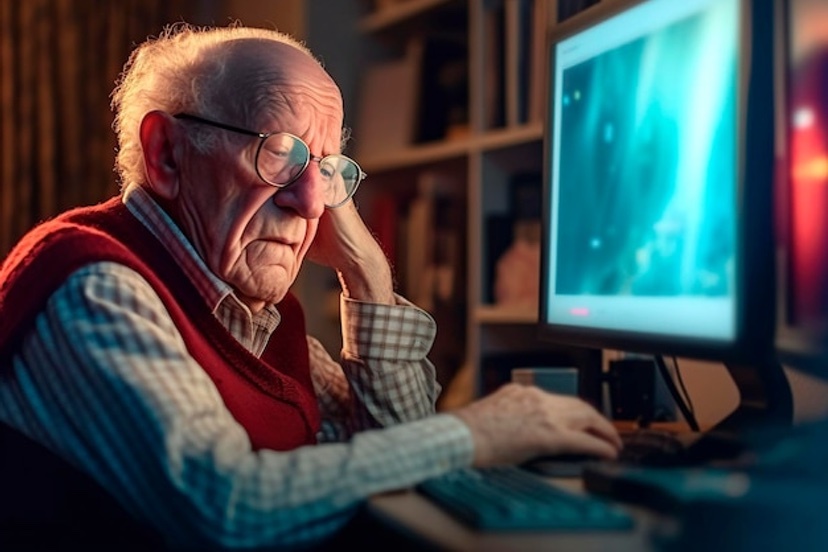
Social media is no longer social media — it’s corporate media, and we are its unpaid workers…
— from an essay by Tom Froese on Medium.com, December 30, 2025.
I hope I’m not the only person who objects to serving as an unpaid worker for corporate media. Which used to be called social media, back in the days when people were still social, and not corporate.
I mean, I wouldn’t mind being a worker for corporate media, per se. It’s the “unpaid” part that grates on my feelings of self-worth.
As writer Tom Froese noted in his article:
For a short, glorious time, as blogs, podcasts, and then social media grew in popularity, it really felt as though individual creators had the power to distribute their ideas and work to their audiences.
For most of human history, we got our information (and our misinformation) from the elders of the tribe. Then later, certain people claimed to be ordained by the gods to be kings and emperors and bishops… and naturally had to take control of the stories that people were allowed to hear. So misinformation became much more valuable, as humanity became civilized.
Fast forward to the 1990s — skipping over some relatively unimportant developments, like the printing press and radio and TV — and we arrive at the development of the World Wide Web.
For a short, glorious time, ordinary people (like you and me) were plugging into the Internet and creating ugly, amateur but highly democratic websites and podcasts and generally impressing our friends. A while later, social media arrived and even grandmothers and grandfathers started getting involved.
It really felt as though individual creators held the power to distribute ideas and work to their audiences.
Like democracy, and civil rights, it was nice while it lasted.
But the technological landscape completely changed when the algorithms arrived. The ordinary people (like you and me) didn’t ask for these algorithms, and maybe we didn’t really notice them at first. But now we’ve noticed, in a big way, and it’s a love-hate relationship.
Mostly hate, because the decisions about what we see and hear and read are no longer in our hot little hands. The power of distribution is back in the hands of just a few large companies. We can’t exactly call them kings or emperors. More like, capitalists. But pretty much the same thing. Ordained by the gods, etc.
Thanks to the algorithms, it’s them — the corporations, not us — who now control the flow of ideas and creative work.
Which is to say, the flow of misinformation.
Oh, sure, I know that it feels like we are still making decisions about which misinformation we’re choosing. That’s part of the system. The corporations give us lots of selected options based on our past behavior… options that align almost perfectly with what the algorithm thinks we’re most likely to waste our time listening to or reading.
As Mr. Froese suggests, that process of picking from the selections presented by the algorithms is the “unpaid work” we’re doing on behalf of the corporations.
For hours, every day.
What I want to know: can we get paid?
Underrated writer Louis Cannon grew up in the vast American West, although his ex-wife, given the slightest opportunity, will deny that he ever grew up at all. You can read more stories on his Substack account.