
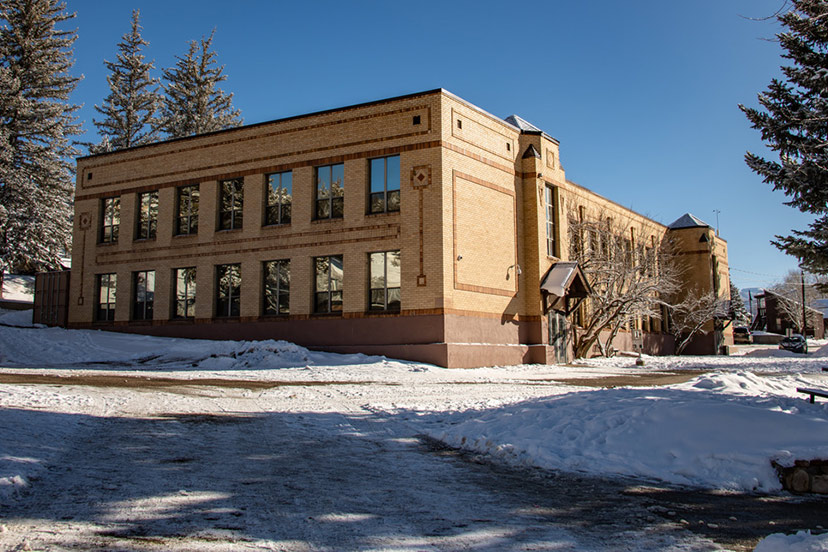
Photo: The 100-year-old school building in downtown Pagosa Springs that currently serves about 225 5th-6th graders.
We expect misinformation, and disinformation, when politics are involved. But it feels somehow more unplesant when misleading information is coming from our own neighbors.
I’ve often heard that you shouldn’t do math in public, and I have myself stumbled into that trap on occasion. So I try my best, here in the Daily Post, to share the most accurate numbers I can manage. Like these numbers that will appear on your mail ballot, arriving in the next few days:
SHALL ARCHULETA COUNTY SCHOOL DISTRICT NO. 50JT DEBT BE INCREASED BY UP TO $79,900,000, WITH A REPAYMENT COST OF UP TO $156,500,000…
If you visit the CitizensForASD.org campaign website, you will see this information:
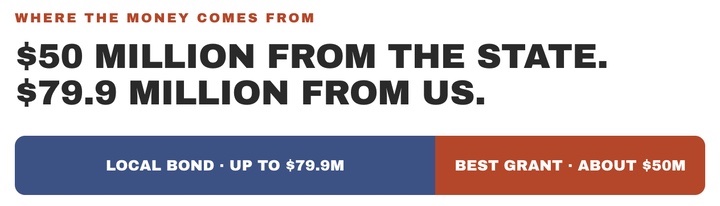
If the 5A proponents wanted to be truthful, they would have stated that “up to $156.5 million comes from us.” Archuleta County would have to pay the both principal and interest on the debt, which basically doubles the amount owed.
Colorado taxpayers in general might possibly provide $50 million through a BEST grant — but that amount might be a ‘Certificates of Participation’ (COP) debt requiring principal and interest payments as well… with a repayment cost totaling $100 million.
All told, this new facility could conceivably cost taxpayers $250 million… that’s a quarter of a billion dollars.
Here’s another message that ‘CitizensForASD.org’ posted on the website’s Home Page:

Here we have a mix of accurate information and questionable information. Archuleta School District (ASD) has indeed chosen a 37-acre District-owned parcel on Vista Boulevard as the site for the proposed facility. The $50 million state grant mentioned here is a possible state grant. ASD applied for this same $50 million grant last February but did not receive it. The District can apply for it again next year. There’s no guarantee they will get it. But if they don’t get, then — according to Ballot Measure 5A — ASD will not move ahead with the $156.5 million property tax increase.
One of the main questions facing the average voter is, of course, “Can I personally afford this proposed facility?”
CitizensForASD.org asserts rather boldly that a home worth $300,000 will owe about $185 a year in additional property tax if 5A gets approved. The website includes a ‘tax calculator’ that can predict your personal tax increase, for your home or commercial property, based on their formula.
But the website tells us (in small print) that this number is just an educated guess:
An exact figure is not possible yet, and the district says so plainly: the term of the bonds and the state funding options both move the number, so the precise cost is not known until the bonds are sold and the levy is certified.
There are many things we don’t know about the proposed PK-8 school facility.
We don’t know what the school design looks like. We don’t know the traffic impacts. We don’t know what ‘safety features’ the building will include.
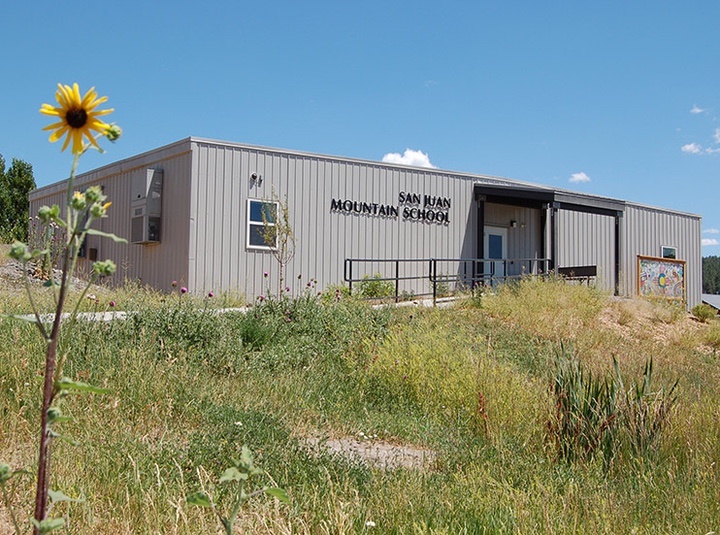
We don’t know if it will be a cheap metal building, like the San Juan Mountain School, recently erected by ASD adjacent to the High School parking lot.
We don’t know what it will cost each property owner.
Who, for example, calculated the number “$185 a year for a $300,000 home”? Which would mean $370 a year for a $600,000 house, for 25 years. (25 x $370 = $9,250.)
What will a local business owner have to pay, when their property is taxed at 4 times the residential rate?
I reached out to Superintendent Holt, asking if he could provide the formula used to calculate this estimate, so the voters can double-check the math. We wouldn’t want to be surprised to find out later that this number was too low, for example. Mr. Holt directed me to Lisa Scott, the chair of Citizens for ASD, so I sent her an email. She soon responded with the formula I was seeking.
The tax increase estimates as publicized by ASD and by Citizens For ASD were provided by ASD’s financial advisors, Stifel.

One of the ways Stifel has become a #1 Wealth Management Firm is by helping school districts pass school bond measures. The bonds are then sold to (Stifel?) clients, who are paid about 200% of what they invested..
We have to understand that, if a Pagosa Springs family with a $600,000 home ends up paying $370 in additional taxes, about $190 will be used to build a new school, and $180 will go into the pockets of Stifel investors… or similar investors… at the current interest rate… (which, not incidentally, has increased since this tax increase estimate was provided to ASD… and seems likely to increase again later this year, before ASD can sell the bonds at the earliest next May.).
I imagine Stifel would very much like Archuleta County voters to approve this bond.
I was told Stifel used a formula provided by — and required by — the state of Colorado.
Here is the chart I received from Ms. Scott. Because Stifel and ASD do not know the final cost of the bond (principal & interest), Stifel provided several possible calculations. Ms. Scott provided one of them to me as an example:
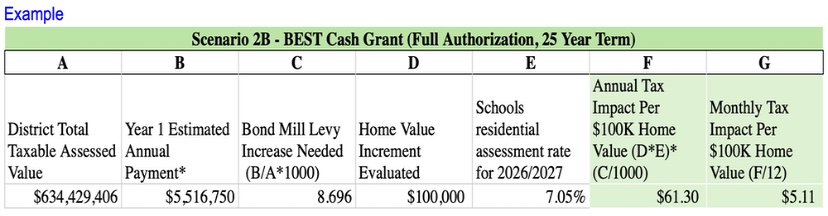
In this example, Stifel states that a residential property valued at $100,000 would pay $5.11 per month, or $61.30 per year. So a property valued at $600,000 would pay about $370 per year in additional property tax.
I found this particular “Example” unsatisfying, because it lists the “Year 1 Annual Payment” as “$5,516,750”.
But the ballot language approved by the School Board, that will appear on your ballot, states:
…AND SHALL DISTRICT TAXES BE INCREASED BY UP TO $6,700,000 ANNUALLY TO REPAY THIS DEBT…
“5,516,750” is much less than “$6,700,000”. Only about 82%, in fact.
Are the financial consultants at Stifel — and the School District, and the campaign committee — quoting us only 82% of what we might end up paying?
Is this “misinformation”?
Or “disinformation”?
That’s another thing we don’t know about this proposed tax increase. We don’t know if we’re being played for fools.
Bill Hudson began sharing his opinions in the Pagosa Daily Post in 2004 and can't seem to break the habit. He claims that, in Pagosa Springs, opinions are like pickup trucks: everybody has one.