
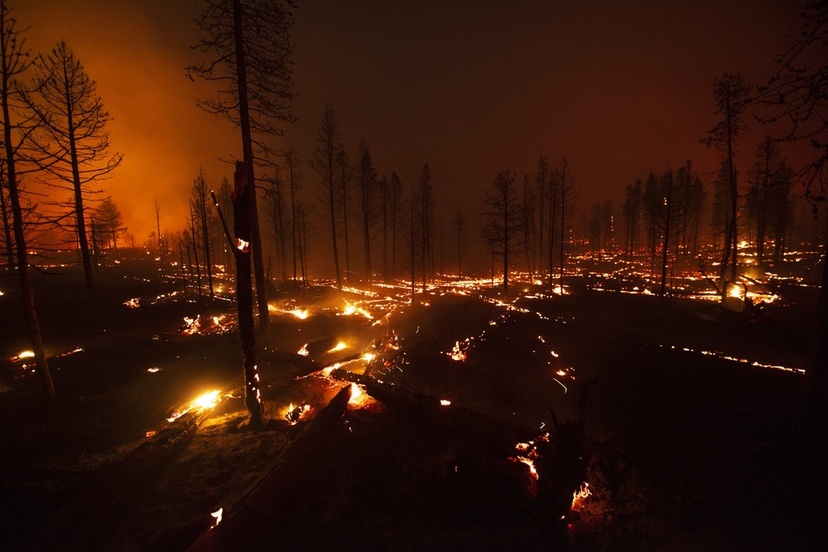
Photo: Aftermath of the East Troublesome Fire on the east side of U.S. 34 south of Grand Lake in October 2020. (Thomas Cooper/Special to Colorado Newsline)
This op-ed by Sammy Herdman appeared on Colorado Newsline on January 13, 2026.
2026 is a big year for Colorado voters. The midterms will require Coloradans to weigh in on a new governor and a U.S. senate seat, in addition to 20 state Senate elections and the usual U.S. and state House of Representative elections.
Messaging from all candidates — especially Democrats — is increasingly focused on affordability, leaving some issues, like climate change, in the dust. Yet political candidates that neglect to include climate change in their messaging and policy platforms are making a mistake.
Affordability and climate change are inherently and intimately bound; climate issues are kitchen table issues and Colorado’s 2026 candidates should not forget it.
There is no topic more fitting for the kitchen table than food. According to a Politico poll, the rising cost of groceries is more concerning to Americans than even housing and health care. And for good reason: In the past five years grocery prices have increased by an estimated 25% to 29%, a price hike that low- and middle-income Coloradans feel acutely. And while there are a medley of reasons that food prices are rising (inflation, bird flu, corporate consolidation, the Trump administration’s tariffs), climate change is a leading cause.
Affordable food prices depend upon consistent food production, which is exactly what is at stake as the climate warms and erratic weather like droughts, floods, freezes, heat waves and hurricanes become more common. In 2024 alone, extreme weather events in the U.S. caused $20.3 billion of losses for farmers. Climate change is expensive for farmers and consumers.
There’s some evidence that climate change is increasing the frequency and severity of wildfires by exacerbating droughts and lengthening the fire season. Twenty of Colorado’s largest wildfires ever recorded have occurred since 2001. And these wildfires don’t just pollute the air and traumatize nearby residents — they impact many Coloradans by driving up home insurance prices.
Between 2018 and 2023, Colorado’s home insurance premiums increased by 58%, elevating the state to the unfortunate rank of No. 6 in the country in terms of the most expensive home insurance market. In an already under-supplied housing market, in an economy with chronic inflation, climate change’s impact on the cost of owning or renting a home only adds fuel to the fire.
Energy bills are another classic kitchen table issue interconnected with climate change. The greater temperature extremes arising from climate change force consumers to use more energy to cool and heat their homes. Beyond that, utility providers increase energy rates when they have to make large investments — such as upgrades to make their infrastructure less likely to spark wildfires on dry, windy days.
Climate change creates dozens of other direct and indirect burdens on society that taxpayers must bear. Wildfires and air pollution exacerbate and cause respiratory and cardiovascular diseases, leading to higher health care costs that eventually impact insurance premiums. Extreme disasters and heatwaves lead to fatalities and expensive infrastructure damage. A study by the World Economic Forum estimates that climate change will cost the world between $1.7 trillion and $3.1 trillion per year until 2050, considering damages to infrastructure, property, agriculture and human health.
Another study estimates that damage from climate change will cost the global economy $38 trillion per year.
Common sense solutions to mitigate the cost of climate change deserve the attention of Colorado’s aspiring lawmakers. For example, renewable energy sources are cheaper over their lifetime compared to natural gas and are getting cheaper each year. Supporting and speeding the state’s transition to renewables will pay off for consumers in Colorado, much as it did for Texans: Between 2010 and 2022, wholesale electricity costs decreased in Texas cumulatively by $27.8 billion due to the production of wind and solar energy. Similarly, helping consumers electrify their vehicles and appliances will decrease individual energy costs in the long-term.
Supporting Colorado’s local food systems, including local distribution and processing centers, can undermine corporate consolidation that prevents price competition. A stronger local food system could also protect consumers from volatile grocery prices by eliminating reliance on global supply chains vulnerable to natural disasters.
There are also many strategies that can benefit communities and the climate while also mitigating the costs of climate change. Conserving old-growth forests and wetlands can safeguard carbon sinks while also providing natural resiliency to floods and wildfires. Urban design that prioritizes trees, parks, bike lanes and pedestrian access not only encourages car-free transit but also lessens the intensity of heatwaves, improves air quality, and beautifies neighborhoods.
Many Americans already understand that climate change is a kitchen-table issue. Climate change costs Coloradans money, but decisive action can reduce the harm and cut some costs drastically. As the midterms creep nearer, voters should recognize that any candidate ignoring climate change is leaving one of the best policy frameworks for achieving affordability on the (kitchen) table.
Sammy Herdman has an environmental policy master’s degree from the University of Denver and has worked for various regional and international environmental nonprofits, including Mighty Earth, The Regional Air Quality Council, NRDC, and Environment Colorado.
Colorado Newsline is part of States Newsroom, a nonprofit news network supported by grants and a coalition of donors as a 501c(3) public charity. Colorado Newsline maintains editorial independence. Contact Editor Quentin Young for questions: info@coloradonewsline.com.