
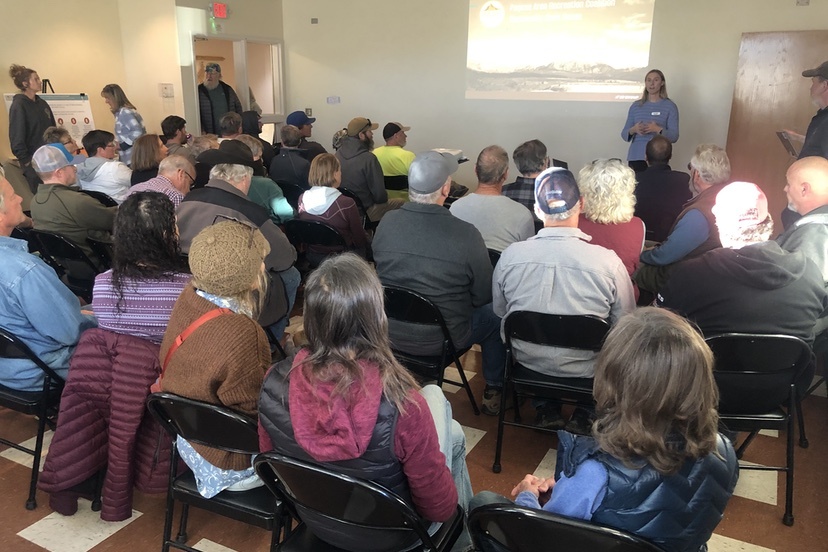
Photo: Standing-room-only audience at one of two Pagosa Area Recreation Coalition (PARC) presentations held in the South Conference Room at the Ross Aragon Community Center, December 10, 2025,
Here’s a graph from the Pagosa Area Recreation Coalition (PARC) citizen survey conducted in 2025, that we didn’t share in Part One:
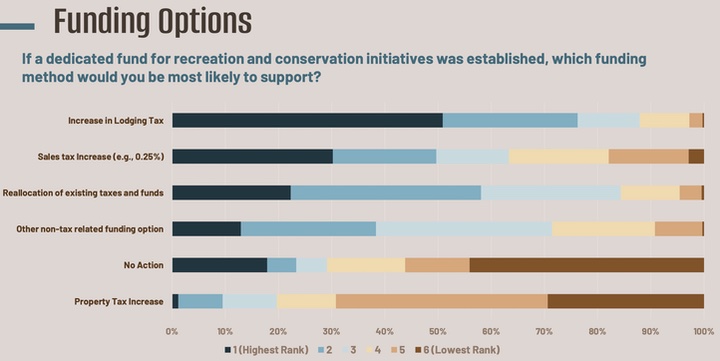
This graph is one of many that were shared at a presentation at the Community Center on December 10.
PARC is a regional coalition dedicated to supporting the development of a sustainable recreation plan for the “study area region”, which includes the Town of Pagosa Springs, Archuleta County, plus portions of Mineral and Hinsdale counties. Representatives from governments and land management agencies are participating in the coalition to ensure collaboration and coordination.
In 2024, PARC secured a $125,000 grant from Colorado Parks and Wildlife, and $30,000 from the U.S. Forest Service, and joined the Colorado Outdoor Regional Partnership Initiative (RPI).
From the CPW website:
The Colorado Outdoor Regional Partnerships Initiative (RPI) advances regionally driven collaboratives working to ensure that Colorado’s land, water and wildlife thrive while also providing equitable access to quality outdoor recreation experiences. The Initiative convenes broad outdoor interests through Outdoor Regional Partnerships to develop regionally rooted visions and action plans that advance sustainable outdoor recreation and conservation priorities. Combined with Colorado’s Outdoors Strategy, a collaborative vision for conservation, climate resilience, and sustainable recreation, Outdoor Regional Partnerships are informing future investments for Colorado’s outdoors.
Read the 2024 Regional Partnerships Initiative Annual Report and RPI StoryMap for features on Outdoor Regional Partnerships and their work convening broad outdoor interests in support of thriving people, landscapes and wildlife.
Beginning with its initial grants, PARC hopes to develop a long-term, community-supported outdoor recreation plan for the greater Pagosa Springs area.
PARC goals:
- Develop a regional outdoor recreation plan that balances sustainable recreation with conservation. Collaborate with land managers and stakeholders to implement strategies that ensure quality outdoor experiences while protecting public lands.
- Engage the community through surveys, meetings and data collection to shape the plan based on local needs.
- Work collaboratively to implement and monitor PARC’s outdoor recreation plan.
We might note, from the above descriptions, that the Outdoor Regional Partnerships Initiative is aimed at outdoor recreation. However, some of the survey results from the 2025 citizen survey were focused on indoor recreation. I’m not yet clear as to the overall focus of the PARC coalition, but part of the focus might be on development of a tax-supported Special Recreation District. More about that idea in Part Three.
Grant funding is a fine way to kick off a new citizen-driven project. But ultimately, an organization — if it’s going to survive long-term — needs a steady funding stream.
Here’s that chart again. If a dedicated fund were established, where might the funding come from?
We see a couple of possibly meaningful details here. The most highly ranked funding source, among the respondents, appears to be “Increase in Lodging Tax”. The Archuleta Board of County Commissioners have been discussing the possibility of increasing the county lodging tax — perhaps from the current 1.9% up to a maximum of 6%, as allowed by House Bill 25-1247, signed into law last spring. Such an increase would need local voter approval, and the ballot measure would also need to indicate what the increased taxes would be used for. This past November, voters in several Colorado communities did approve changes to their lodging tax, or created a new lodging tax.
Ouray county voters created a new 6% Lodgers Tax, to be used “to support our local workforce, quality of life, environmental health, and public safety…” Uses can include housing and child care.
Eagle County voters increased the existing tax from 2% to 4%, to support child care, public safety and emergency services. Gilpin County voters approved an increase from 2% to 6%, for housing, child care, and public infrastructure. Hinsdale County voters tripled their tax to 6%, for child care, emergency medical services, and search and rescue services.
Park County voters tripled their tax to 6% for roads, public safety, emergency services and tourism marketing. Routt County voters likewise tripled their tax to 6%, for roads, public safety, and tourism promotion.
Voters in Chaffee County and in Custer County rejected proposed tax increases.
One meaningful detail from this slide: the Archuleta County recreation community seems comfortable with using lodging tax to enhance recreational outcomes.
According to HB25-1247, a county lodging tax increase can be used for:
1. Tourism marketing;
2. Housing and childcare for the tourism-related workforce, including seasonal workers, and for other workers in the community;
3. Public infrastructure maintenance or improvements;
4. Enhancing public safety measures by funding local law enforcement, fire protection services, and emergency medical services.
I don’t see an obvious option for funding “recreation” with county lodging tax, unless maybe we’re considering a hiking trail to be “public infrastructure”?
We might also note that, last summer, the Archuleta BOCC held two “listening sessions” related to a possible lodging tax increase on the 2026 ballot, and I don’t recall hearing any of the commissioners expressing a desire to use a tax increase to fund “recreation”.
Meanwhile, another glance at the graph above suggests that the recreation community is highly adverse to using a property tax increase to fund a recreation district, with about 80% of respondents giving that option the lowest ranks — 3, 4 or 5.
Which brings us back to a graph shared in Part One.
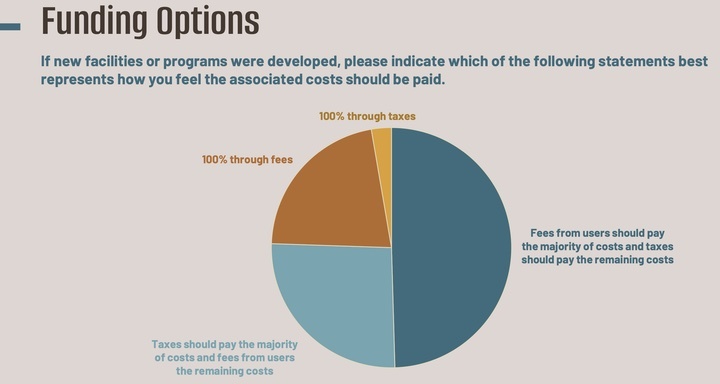
If new facilities or programs were developed, about 75% of the respondents felt that the costs ought to be funded either mostly or 100% through user fees.
Only a tiny fraction thought a future area-wide recreation agency ought to be funded 100% through taxes.