
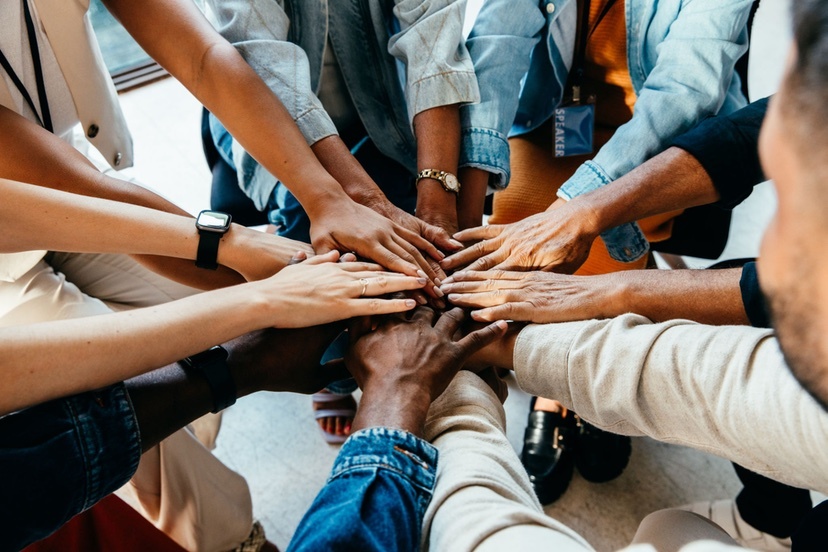
In the weeks leading up to Christmas, care shows up quietly across Archuleta County.
It looks like neighbors checking on elders during cold snaps. Extra food shared without announcements. Teas brewed and delivered. Rides offered, childcare swapped, prescriptions picked up, and doors kept open longer than planned.
These acts are not unusual here. They are familiar, and they reveal something essential: our community’s health —mental, physical, spiritual, and cultural — has never depended solely on formal systems.
The future of community health is mutual aid.
I offer this reflection with respect for the many people working inside nonprofits, agencies, and public institutions who care deeply about this place. The problem is not individual intent. It is that our systems were never designed to hold the full reality of community need.
When Place & Structures Shape Health
Archuleta County sits within the Southwest borderlands — a region shaped by histories that are not past, but present. Settler communities exist alongside sovereign Indigenous nations. Hispano, Chicanx, Mestiza, Indigenous, working-class, disabled, and queer residents have sustained this region across generations, even as land, housing, and resources have been increasingly commodified.
Indigenous scholar Melanie Yazzie reminds us that colonialism is not simply history, but an ongoing political and economic structure that determines who controls land, resources, and decision-making.
Chicanx scholar Gloria Anzaldúa wrote that “the borderlands are physically present wherever two or more cultures edge each other.” In places like ours, those tensions show up in who gets to stay, who is displaced, and whose needs are met.
Community health does not deteriorate because people fail to cope. It deteriorates because the conditions required for health are systematically undermined.
Ongoing Gentrification Is a Health Determinant
As housing costs outpace wages, stress accumulates. Families stretch food. Elders worry about staying housed and warm. Workers juggle multiple jobs and long commutes, losing time for rest, care, and connection.
Queer and trans residents—people whose sexual orientation or gender identity falls outside traditional expectations — especially BIPOC (Black, Indigenous, and other people of color), often carry additional layers of vigilance around safety and belonging.
Trauma-informed public health and relational science explain what many already know intuitively: prolonged instability dysregulates nervous systems. Anxiety, depression, substance use, and chronic illness increase not because people are broken, but because their environments are unstable.
In this context, distress is not pathology. It is a rational response to political and economic conditions.
Why Mutual Aid Exists
Mutual aid exists because siloed systems leave people behind.
Many nonprofits and agencies are constrained by narrow funding streams and rigid program definitions. Community members hear it repeatedly: we’re funded for this, not that; we can refer you elsewhere. These statements may be administratively accurate, but they function as barriers when people are navigating hunger, housing instability, illness, or crisis all at once.
This fragmentation is not accidental. It is how modern service systems are structured—to manage parts of life separately, even when lived reality is inseparable.
Communities did not wait for those systems to change. We responded — not only to survive, but to thrive.
Mutual aid aligns closely with trauma-informed, healing-centered, and harm-reduction approaches: safety, trust, choice, collaboration, and connection. More importantly, it is community-governed.
Healing-centered harm reduction recognizes that people deserve care, dignity, and safety without preconditions. It focuses on reducing harm, supporting regulation, and strengthening connection — rather than punishing people for how they survive.
Across Archuleta County and the region, communities are already practicing this:
- Food shared through gardens, hunting, home kitchens, church meals, and cultural gatherings
- Traditional and home-based medicines passed through Indigenous, Hispano, and Chicanx families
- Quiet harm-reduction practices — checking on neighbors, ensuring warmth, food, water, and rides
- Queer mutual-aid networks sharing housing leads, food, emotional support, and safety planning
- Informal elder and disability care coordinated long before formal systems can respond
Lakota scholar Nick Estes reminds us that “mutual aid is not charity — it is how our people have survived when the state failed or sought to eliminate us.” From a public-health perspective, these practices prevent crises. From a political perspective, they demonstrate communities governing their own survival.
This is not supplemental care. It is frontline infrastructure.
And it is not new. Our ancestors—across Indigenous, Hispano, Chicanx, Mestiza, and African diasporic traditions—have practiced these forms of care for generations. What we are witnessing now is not innovation; it is remembering.
The Limits of Reform Without Power Shift
Calls for collaboration and inclusion are important — but woefully insufficient.
Many nonprofit boards and decision-making bodies in this region are composed primarily of people economically insulated from displacement and scarcity. Some are retired. Some own second homes. Many are generous and well-intentioned. Yet distance from lived harm shapes what feels urgent—and what does not.
This is not a failure of character. It is a feature of governance systems that concentrate authority away from those most impacted. In Archuleta County, this concentration of power is inseparable from land and capital — where housing is treated as an investment vehicle, second homes sit empty, and wealth extracted through tourism and real-estate accumulation flows upward while the costs of displacement, hunger, and chronic stress are borne by working families and longtime residents.
Inclusion without power transfer does not resolve this. When communities are only invited to participate in systems built without them, authority remains unchanged.
What Archuleta County Can Do Now
If Archuleta County is serious about community health, it must move beyond asking systems to do better — and begin investing in what already works.
That includes:
- Treating housing, food, and warmth as core health infrastructure
- Funding healing-centered harm reduction, including peer support, cultural care, and non-police crisis response
- Supporting mutual aid without over-regulation or surveillance
- Applying Health in All Policies so decisions about housing, transportation, land use, and economic development are evaluated for their health impacts
- Advancing Healthy Eating Active Living strategies to strengthen food access, walkability, and community connection
- Reforming governance so BIPOC, queer, low-income residents, and others with lived experience hold real decision-making authority — not merely advisory roles
Mutual aid does not need permission to exist. It already does.
The question is whether our institutions will get out of the way, redistribute resources, and learn to follow community leadership—or continue managing harm while communities carry the real work of survival.
As Christmas approaches, Archuleta County is being held together not by perfect systems, but by people who refuse to let one another fall through the cracks.
Mutual aid is not a critique of care. It is proof of it.
The future of community health is already here — rooted in culture, relationship, harm reduction, and collective responsibility. Our task now is not to invent it, but to stop undermining it.
We are not asking permission—we are reclaiming our authority, carrying forward ancestral knowledge, and empowering our communities and our youth to shape a future rooted in sustainability, dignity, care, and collective self-determination.