
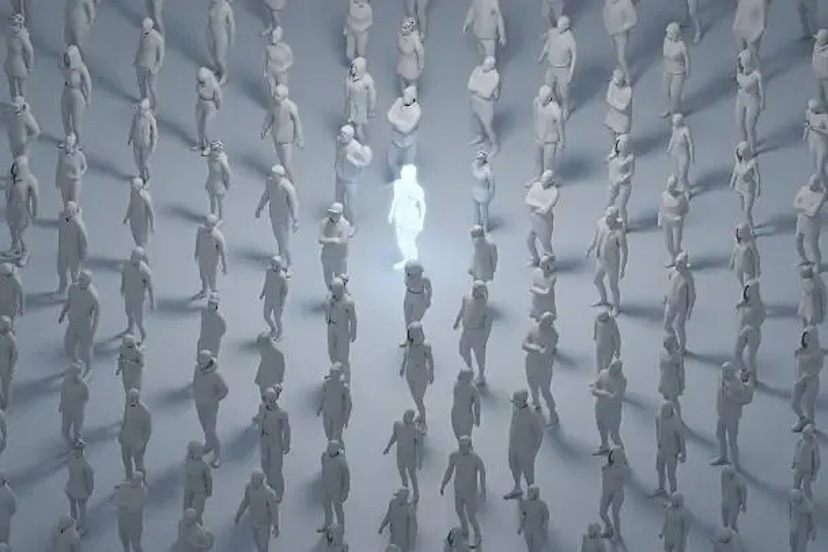
Photo credit: chaofann (iStockphoto)
By F. Van Cappel
Lawsuits claim that AI chatbots are causing delusion and suicide. But the deeper story is about a society where people feel they have no one left to turn to.
Some reporting opens with ominous questions such as: “Can a chatbot push and twist someone’s mind to the breaking point?” This framing suggests intention where none exists. AI language models have no desires, motives, emotions, or awareness. They are tools, not therapists, and they respond to human prompts with statistically generated language patterns — not intentionality.
Yet these articles rarely interrogate the user’s emotional state, the context of their distress, or the societal conditions driving people to seek comfort in a machine. Instead, they focus on AI responses without context, detached from the broader environment of loneliness and unmet psychological needs.
The Deeper Crisis: A Nation of Isolated People
The real question is not whether AI can twist someone’s mind. It is: Why are people turning to AI for comfort instead of to their parents, friends, or community?
North America’s social fabric has been thinning for decades. Parents often work multiple jobs to stay afloat. Institutions have created the illusion of “age classes” that separate rather than unite people. Consumer culture encourages families to place a television in every room; as a result, each child watches different entertainment, leaving no shared narrative or commentary to connect around.
Young people feel disconnected from older generations. Community life has shifted from spontaneous, informal interactions to scheduled activities with weak emotional bonds. Vulnerability is met with discomfort or judgment rather than compassion.
We have created a society where millions feel fundamentally alone — even in a crowd.
In such a landscape, AI becomes a surrogate listener not because it is capable of empathy, but because it is available, consistent, and nonjudgmental. That alone should be a national warning sign.
Mental-Health Systems Are Overwhelmed and Inaccessible
Therapy is unaffordable for many, unavailable for others, and stigmatized in some communities. Waitlists stretch for months. Insurance barriers are daunting. Add to this the emotional pressure many individuals feel not to “burden” friends or family with their struggles, and the path to a chatbot begins to make tragic sense.
People are not choosing AI because it is better. They are choosing it because human support is out of reach.
Blaming AI Allows Society to Avoid Accountability
Media narratives that place responsibility solely on AI serve as convenient deflection. They shift attention away from:
- collapsing community structures
- weakened family relationships
- emotional illiteracy
- rising economic pressures
- the normalization of isolation
These are the real conditions producing emotional dependency — not the technology itself.
Lawsuits are evidence of parental dismissal and missed opportunities; they do not solve underlying societal problems. Lawsuits may address safety concerns, but they cannot fix a society that has become increasingly disconnected and unable to meet its members’ emotional needs.
Instead of asking: “Why did AI encourage someone’s despair?”
We should be asking: “Why did a struggling person feel more understood by a chatbot than by another human being?”
Until we confront the roots of our emotional disconnection — our declining empathy, our fractured communities, and the inaccessibility of mental-health support — we will continue to misdiagnose the crisis.
AI is not the cause of human suffering. It is a mirror reflecting a society where suffering often goes unseen.
Conclusion
Blaming AI may feel satisfying, but it distracts from a more profound, more uncomfortable truth: we have not built a society capable of supporting the emotional needs of its people. No amount of technological regulation will fix a crisis of human disconnection.
The solution must start with rebuilding empathy, community, and actual human presence — the things no machine can ever replace.
F. Van Cappel writes about culture, technology, and the human condition, with a focus on empathy, social connection, and the impact of digital life on modern society.