
“Electricity is the new price of eggs,” said Charles Hua, executive director of Powerlines, a nonpartisan organization which aims to modernize utility regulations and reduce power bills. “This is a defining moment for politicians of all stripes — what’s your answer to lowering utility bills? Because I think consumers and voters are looking for leadership on this…”
— from an article by David W. Chen in The New York Times, November 30, 2025.
On November 5, Georgia voters in Georgia elected two new Public Service Commissioners to the state’s five-person body, as the rising cost of electricity becomes a top consumer issue nationwide.
In that election, challengers unseated two PSC incumbents who had voted to approve six rate hikes over the last two years — spiking utility bills by 33 percent, or about $40 a month for the average Georgia household. This marked the first time since 2006 that an incumbent Georgia PSC commissioner has lost their seat in an election.
In some of Georgia’s most rural counties, Republicans crossed party lines month to help propel two Democrats, Peter Hubbard and Alicia Johnson, to landslide upsets.
No Democrat had served on the five-person commission, which regulates utilities and helps set climate and energy policy, since 2007.
Charles Hua, the founder and Executive Director of consumer education nonprofit PowerLines, characterized the election as a “seismic change in Georgia’s energy landscape” and said it reflected “a new politics of electricity in America.”
“Consumers have sent a clear message: they are paying attention and will hold public officials accountable for decisions that impact their utility bills.”
There wasn’t much consumers could do to hold anyone accountable for rising egg prices, last March, when retail prices hit $8 a dozen, partly due to the bird flu epidemic and partly due to anxious shoppers and the food industry stocking up on eggs, fearful that the price would continue to rise.
Things have settled down somewhat in the egg department. A dozen eggs currently cost about $2.25, on average, according to EggPrices.com
But we’re actually discussing electricity.
For whatever reason, electricity is considered a “public service” in America. Eggs are not.
La Plata Electric Association (LPEA) recently posted a press release titled, “LPEA’s 2026 Budget Holds Rates Flat, Protecting Members from Rising Costs”.
The La Plata Electric Association (LPEA) Board of Directors has unanimously approved the cooperative’s 2026 budget, which includes no rate increase for members. This decision comes even as Tri-State Generation and Transmission Association (Tri-State), LPEA’s wholesale power supplier until April 2026, implements a rate increase that would have raised costs by $9 per month for the average residential member starting in January.
“Our members count on stability, and we are proud to announce that LPEA is holding rates flat for 2026,” said LPEA CEO Chris Hansen. “Through disciplined financial management and forward planning, we’re protecting our members’ wallets at a time when costs are increasing nearly everywhere else.”
Utilities nationwide continue to face rising cost pressures due to inflation, supply chain challenges, infrastructure demands, and tariffs. With careful planning and sound governance, LPEA will continue to provide safe, reliable, and affordable power as it prepares for a more flexible, locally driven energy future…
“This is the cooperative difference,” said LPEA Board President Nicole Pitcher. “As a locally governed cooperative — not a corporation — we make decisions that put our members, not shareholders, first. Holding rates steady in 2026 is the result of disciplined, long-term planning in preparation of our transition to a new business model.”
Which is not to imply that LPEA rates remained flat in 2025. Our electric rates increased by about 8% last April. But LPEA asserted then that an 8% increase “compares favorably to the 20% increase in the Consumer Price Index (CPI) since 2020, representing the benefit of effective cost control measures and strong financial stewardship by the cooperative’s staff.”
It also compares favorably, for example, with the 33% increase in electric bills in Georgia over the past two years.
But the LPEA press release suggests other historic changes coming to our local energy landscape.
The first meeting of the La Plata Electric Association cooperative was held on August 22, 1939, in downtown Durango, where citizens had been enjoying the benefits of electricity since 1892 when Durango Light and Power Company embraced the fledgling technology of alternating current (AC) electricity distribution. Few urban residents believed that the rural parts of Southwest Colorado would ever be illuminated, due to the tremendous cost of extending lines and service to isolated farms and ranches. But the effort had been spurred by the establishment of the federal ‘Rural Electrification Administration’ (REA), created in 1936 to provide federal loans explicitly to “shine the light” in rural areas.
Here’s a somewhat silly 30-second video meant to give a sense of “LPEA Through the Years.”
The biggest change at LPEA might be its decision to exit its contract with Tri-State Generation in April 2026.
For lo these many years, Tri-State — also an electric cooperative — provided wholesale electricity to LPEA, but the agreement put limits on the amount of locally-produced electricity LPEA was allowed to purchase. A 2025 agreement with Mercuria Energy America, LLC — one of the world’s largest independent energy and commodity groups — is expected to provide “reliable, cost-effective electricity for LPEA members through the 2026–2028 bridge period.”
From the LPEA wbsite:
This agreement gives the cooperative a diversified and flexible power portfolio and, when combined with LPEA’s other power purchase agreements, will lower the blended cost of power by more than 10 percent starting in 2026 — compared to current wholesale rates. The blended cost of power refers to the cost of the electricity plus the cost of transmission of the electricity to customers.
When I did a bit of research into “rising electricity rates”, I came across basically three explanations for price increases that generally exceed inflation rates.
1. We’re all using more electricity. Industrial users, home electronics, electric cars, etc.
2. Our national electric infrastructure is old — in some places, over 100 years old — and needs to be replaced and upgraded.
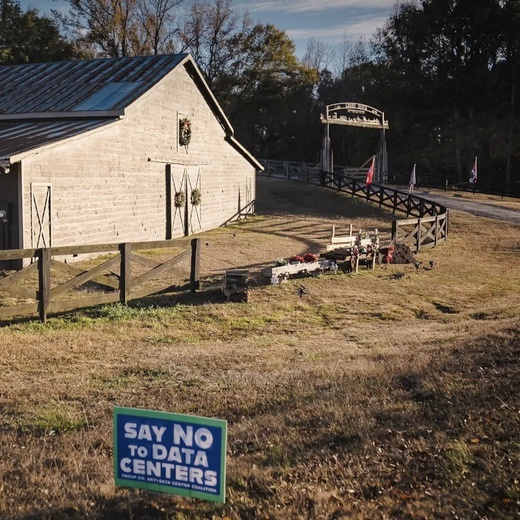
3. Data Centers. The nation’s billionaires and millionaires need a place to invest all their excess money, and data centers for energy-hungry AI operations are the latest investment fad. These data centers are sucking the grid dry, not to mention sucking water resources dry.
The New York Times article linked at the beginning of this editorial suggests that large data centers were originally built close to urban centers, but increasingly now are being planned for rural locations where land is cheaper and local government subsidies may be more available.
Hopefully, Southwest Colorado won’t do anything stupid.
From the LPEA press release:
The decision to keep rates flat also aligns with LPEA’s updated strategic goal of striving to keep members’ cost of electricity lower than 70% of other Colorado electrical cooperatives, and by 2030, reducing carbon emissions by more than 80% from 2005 levels, surpassing state climate goals.
“As we enter this next chapter, LPEA is focused on protecting our members and building a stronger, more resilient cooperative,” [LPEA CEO] Hansen added. “We’re not just keeping the lights on, we’re ensuring long-term affordability, lower emissions and high reliability for Southwest Colorado.”
For more information about LPEA and their 2026 rates see here.