
Photo: Signs on a closed gate mark a seasonal closure at Perins Peak State Wildlife Area in Durango.
By John Livingston
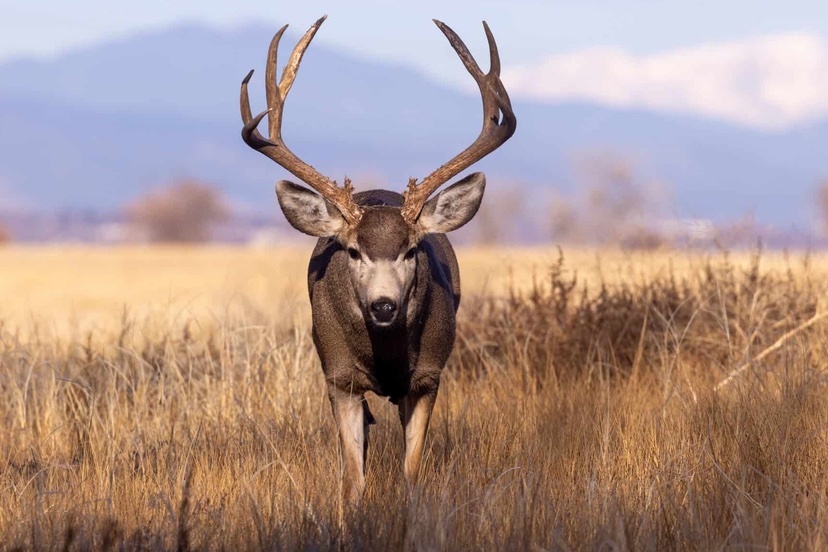
Winter can be hard on wildlife, and every calorie counts as deer and elk try to survive until spring.
Colorado Parks and Wildlife and partner land managers across southwest Colorado use seasonal winter closures in an effort to ease pressure on wildlife during the difficult winter months. But the closures only meet their objective when the public complies and puts the needs of wildlife ahead of their own recreational desires.
“Elk and deer need every calorie they can get to survive the winter and give birth to healthy fawns and calves in the spring,” said CPW Assistant Area Wildlife Manager Steve McClung of Durango. “We’ve seen various winter conditions over recent years, whether it be extremely dry winters or ones where we have a huge snowpack. No matter what the conditions are, deer and elk are still struggling to find food this time of year and rely on their dwindling wintering areas to survive.”
CPW’s Durango office has seasonal closures in place effective December 1 for Bodo State Wildlife Area and Perins Peak State Wildlife Area. These closures are in place through April 30. This is done to limit the impact of human recreation in areas where animals congregate to survive winter. As human development continues to spread, areas in which wildlife can find refuge during the harsh winter months become fewer and far between.
“While we know these areas are popular with trail users, well-researched data shows it is also necessary to close them to human activity during the winter months for the sake of wildlife,” McClung said. “There are plenty of other trails in our area for people to recreate on during the winter months where closures are not in place.
“As there continue to be more wants for recreational opportunities, the lands that are seasonally closed become that much more important for our wildlife, and that is something our communities need to consider.”
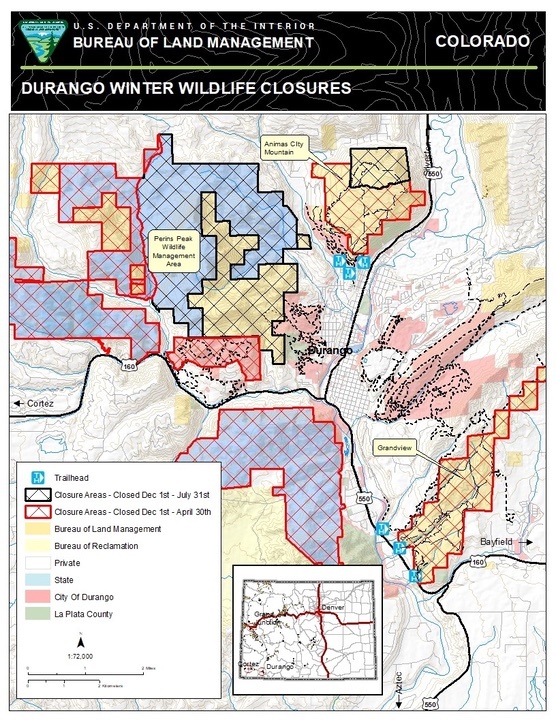
These two CPW seasonal closures in the Durango area add to several other closures on properties managed by the Bureau of Land Management and the City of Durango.
City of Durango Natural Resources Manager Owen Tallmadge encouraged the public to consider how their choices fit into the bigger picture.
“Be sure to educate yourself on where these seasonal closures are and plan your adventure accordingly,” said Tallmadge. “It can definitely be frustrating to encounter a locked gate when you are out on the trails. We should all do our part to respect the closure boundary and to help preserve the wildlife habitats and the conservation values that in many ways shapes our community’s character as much as outdoor recreation does.”
WATCH: A look at wintering wildlife on an area protected by seasonal closures.
Additional seasonal closures are in place December 1 across State Wildlife Areas in the Gunnison area. Similar closures in Montrose and Ouray counties will go into effect January 1.
During winter, wildlife largely rely on built-up fat reserves from forage consumed during the summer and fall. As forage browns up, it is greatly lacking in nutritional value. Deep snow or ground covered by a layer of hard, crusted snow may also make it impossible for animals to reach what little forage may remain on the ground level. Added stress to wildlife caused by the presence of human recreation that displaces them from an area could result in death.
While all closure areas are well marked with gates and signs, there are violations every year. Those in violation of CPW closures are subject to a fine of $139.50. CPW issues several citations each year.
CPW encourages the public to use COTREX before going to a trailhead. The COTREX app is a free, user-friendly app that provides authoritative trail information across local, state and federal agencies. More than 236 land managers have contributed data on more than 45,000 miles of trail across the state. COTREX is unique in that it works directly and exclusively with land managers, parks and open spaces to ensure that the information on the platform comes from a reliable, trusted source.
CPW has partnered with the Wintering Wildlife Conservation Initiative to help spread awareness related to winter recreation and impacts on wildlife. Learn more at winteringwildlife.org.
For a full map detailing all of the seasonal closures on BLM lands across Colorado, go to cpw.info/BLMClosures.
Here are the CPW Durango-area closures that start December 1:
- Bodo State Wildlife Area: Public access is prohibited from December 1 through April 30. The Smelter Mountain Trail is open for foot access only from 10 a.m. to 2 p.m. and dogs are prohibited. Small game hunting is allowed south of County Road 210.
- Perins Peak State Wildlife Area: Public access is prohibited from December 1 through April 30. However, closures remain in effect through July 31 in areas east of La Plata County Road 208.
BLM seasonal closures
- Big Canyon and Sale Barn trailheads off U.S. Highway 160 are closed to all public use.
- South Rim trail, including portions of Sidewinder and Cowboy trails on BLM property accessed from Carbon Junction trail or Crites Connection.
- Grandview BLM trails accessed from Three Springs.
- Animas City Mountain upper loop trails.
City of Durango seasonal closures
- All upper trails as marked in the Twin Buttes open-space area.
- Durango Mesa Park Downhill Trails will also be closed to use from December through April 30 (dependent on spring conditions) to minimize damage to the trails.
Check out this video from Durango Trails on seasonal trail closures.
For updated information on trail conditions around Durango, go to: https://www.durangotrails.org/trail-conditions/
John Livingston is Southwest Region Public Information Officer for Colorado Parks & Wildlife.