

Apparently, certain organizations are dealing with an issue known as the “Too-Much-Talent Problem”.
I’ve previously heard of the “Too-Much-Fun” problem, but I was not familiar with this “Too-Much-Talent” issue until I came across an article by best-selling author Jon Levy in Inc. magazine.
What Chickens Can Teach Us About the Too-Much-Talent Problem
Chickens probably can’t teach us much about the “Too-Much-Fun” problem, which is unfortunate. But Mr. Levy was able to learn something about “Too-Much-Talent” from chicken farming. Or rather, from a scientist who studied chicken farming.
It’s fun to learn stuff.
One of my life goals has been to learn as much as possible. I realize I will not live long enough to learn everything… and also, that I will probably never become a best-selling author, no matter how much I learn. Nor do I worry about getting rich, which is never going to happen anyway, but I would like to accumulate a certain amount of respect, from at least a few people. So I do have a few modest goals.
Humans need goals. It’s part of our nature.
Turns out, that chickens also have goals — goals which might seem eerily similar to human goals — and chickens can teach us stuff… if we have open minds, and if we can stop scrolling on social media and pay attention for a change.
The chicken lesson resulted from research led by a scientist named William Muir. The research involved, specifically, chicken eggs and how to get the largest number of eggs from a fixed number of chickens. Kind of a math problem.
In 1983, the egg industry had settled on a certain preferred breed of chickens — the Dekalb XL.
These birds were bred for one thing and one thing only: raw speed in egg production. They could outlay anything else in the barnyard.
But there was a little problem with Dekalb XL chickens. They were aggressive, territorial, and prone to pecking each other to death.
The industry’s fix was crude, and cruel. Trim off half their beaks, to make it harder for them to kill one another.
From the website “Poultry Performance Plus”:
The most commonly used method is beak trimming by means of a hot blade. This method is usually practiced when the birds are 4-5 days of age. Important with this method is that the blade is hot enough for immediate cauterization of the wound. The blade is hot enough when the center is cherry-red hot.
William Muir wondered if there was a more humane way to increase egg production. Through trial and error, he developed teams of ordinary chickens that could out-produce Dekalb XL chickens, partly because the ordinary chickens didn’t try to kill each other. There’s something about simple “survival” that results in more eggs.
As mentioned, chickens have goals that may be eerily similar to human goals.
The “Too-Much-Talent” problem arises among humans because highly talented people — the ones who can really produce at a high rate — tend to be aggressive, territorial, and prone to pecking each other to death.
Not literally “pecking”. But figuratively. High-achieving humans are not typically good team players. They tend to walk all over the people around them, in an effort to stand out and get noticed, and win the trophy.
Or so I’ve been told. I wouldn’t know, from personal experience.
Author Jon Levy suggests that we learn from William Muir’s experiments with KGB chickens — Kinder, Gentler Birds. Because it turns out that teams of ordinary, run-of-the-mill workers can outproduce teams of high achievers, because the ordinary teams are not trying to exterminate each other.
The lesson: You don’t want too many high-achievers in your organization. You want mostly ordinary folks.
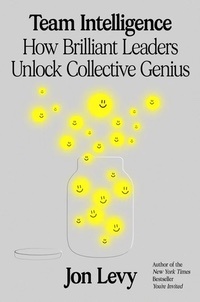 Mr. Levy wrote an entire book about this very idea.
Team Intelligence: How Brilliant Leaders Unlock Collective Genius
As far as I can tell, the team at the Daily Post has been making an effort to unlock collective genius, because we knew long ago that we don’t suffer from the “Too-Much-Talent” problem.
Maybe we need to put more chickens on the team? Evidently, people can learn from chickens, even though the chickens probably have no intention whatsoever of teaching us anything. They simply want to survive long enough to lay a lot of eggs.
This whole fascinating story brings up a big question in my mind.
Can humans learn more from chickens than from AI?
If so, we can won’t need nearly as much electricity.
Underrated writer Louis Cannon grew up in the vast American West, although his ex-wife, given the slightest opportunity, will deny that he ever grew up at all. You can read more stories on his Substack account.