
Please note that the pedestrian sidewalk on the south side of the 1st Street bridge remains closed due to the rerouting of temporary sewer lines. Pedestrians should use alternate routes and avoid the area for their safety.
— from yesterday’s press release from the Town of Pagosa Springs, after San Juan River flood waters damaged the sewer line that hangs below the 1st Street Bridge.
A local business owner called me last week to ask a simple question that does not have a simple answer.
“Why do we have two governments in Pagosa Springs, when we’re really one community?”
As noted yesterday in Part Two, this question has a bearing on Ballot Measure 2A, which has been placed before the voters who live with the town limits for possible approval. If approved, it will create a 1% sales tax to be collected by businesses located within the Town of Pagosa Springs — but not by businesses outside the town limits.
The collected revenues will be used to address a struggling — some might say, “failing” — sanitation system operated by the Town’s sewer district: the Pagosa Springs Sanitation General Improvement District. PSSGID operates in collaboration with the uptown Pagosa Area Water and Sanitation District (PAWSD) which is a separate government entity.
One community… two sanitation districts with separate boards and staff and customer bases.
One community… two separate law enforcement agencies: the Pagosa Springs Police Department and the Archuleta County Sheriff’s Office.
One community… two separate government planning departments, plus a third non-government planning department operated by the Pagosa Lakes Property Owners Association.
One community… two separate streets/roads departments.
One community… governed in part by the Town of Pagosa Springs and in part by Archuleta County, each with their own laws and regulations, and staffing costs, and building maintenance requirements, and budgets, and income streams…
How did this come to be? Let’s consider.
When the Territory of Colorado became the State of Colorado in 1876, a number of changes resulted. For one thing, the State of Colorado could now send Senators and Representatives to Washington DC, to participate in the U.S. government, and Colorado voters could now help select the U.S. President.
The new Colorado government could also designate county boundaries and define the rights and responsibilities of county governments, to help manage social issues at the local level. One of the counties designated was Archuleta County, carved out of the western half of Conejos County by the Colorado legislature in 1885.
The primary duties of the Archuleta County government: maintain the public roads and bridges, manage elections, establish a Sheriff’s Office and appoint a coroner, record property deeds and sales, operate a county courthouse and jail, control the sale of alcohol, and collect taxes to pay for these services.
These are still some of the primary jobs handled by our Archuleta County government.
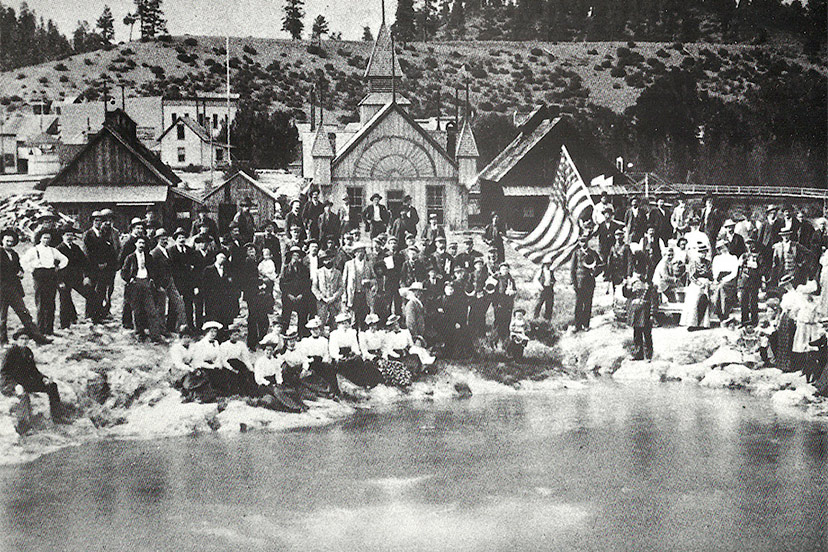
In 1885, the county had no incorporated towns, although it had settlements in various areas. The largest settlement was around the so-called “pagosa hot springs”. (“pah gosa” being the Ute Indian phrase meaning “water that has a bad smell.”)
Six years later, in 1891, the citizens who lived around the hot springs incorporated a town government for themselves: The Town of Pagosa Springs. Apparently, they thought a municipal government could provide better, or different, services than Archuleta County was able to provide. The Town was about one square mile in size, and had dreams of becoming a real town, with street lights and churches and parks and a Fourth of July parade and all the wonderful things that towns can offer.

No other settlements in Archuleta County took the trouble to incorporate. We still have only one municipality in the county.
Outside the municipal limits, the lifestyle remained basically rural: ranching and farming and timber harvesting. The U.S. Forest Service laid claim to about half the unincorporated county, and the southwest corner became part of the Southern Ute Indian Reservation.
By 1950, the Town had grown big enough, and compact enough, to support a municipal sanitation system, and gradually, sewer pipes and manholes were installed in the gravel streets. The backyard outhouses slowly disappeared.
Soon, large ranch properties in Colorado began to attract the attention of developers from Arizona and Texas and Oklahoma and elsewhere, and the Colorado legislature eventually found it necessary to create subdivision regulations, requiring the developers to install sufficient infrastructure, including water and sewer.
In the early 1970s, when Eaton Properties and Fairfield Pagosa were buying up ranch properties west of downtown Pagosa Springs and developing 21 square miles of Pagosa Lakes subdivisions, they created Pagosa Area Water and Sanitation District (PAWSD) as a government district to handle drinking water and sewer service for the new subdivisions.
Within a few years, the majority of Archuleta County’s population lived outside the municipal limits in the Pagosa Lakes area — but the new community never became incorporated, for one key reason.
The Town of Pagosa Springs annexed almost all the commercial properties on both sides of Highway 160, extending four miles to the west, all the way to the North Pagosa Blvd. intersection… and deprived Pagosa Lakes of any possible sales tax revenue with which to fund their own municipal government.
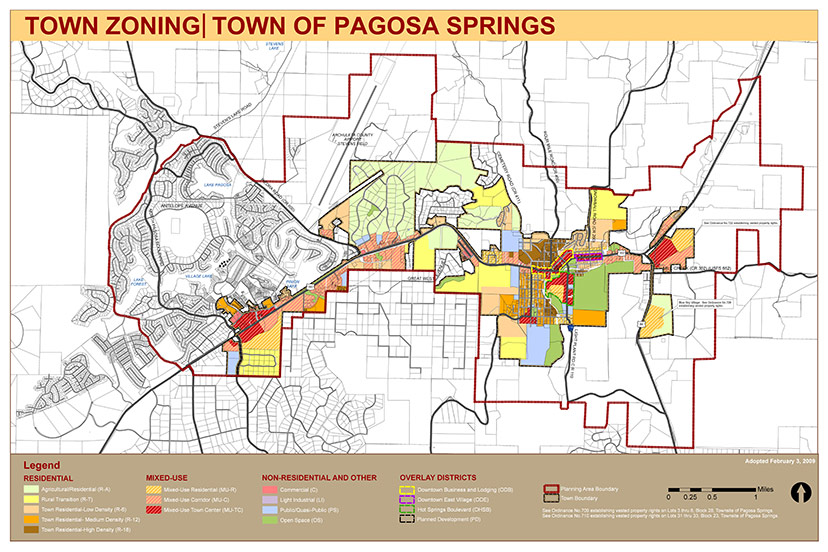
This brings us, I suppose, to the reasons why our community has two local governments each required to provide an extensive range of services to residential neighborhoods.
If the Town of Pagosa Springs had behaved like a normal municipal government, it would have successfully annexed the subdivision neighborhoods uptown, along with the commercial properties, but that happened in only a couple of residential areas.
One result: 85% of the community will not be able to vote on Ballot Measure 2A, but will end up paying an extra 1% sales tax whenever they shop within the town limits.
Tourist and visitors will also pay the extra 1% sales tax when they shop, or book a motel or STR, within the town limits.
That’s if the town voters choose to approve Ballot Measure 2A.