
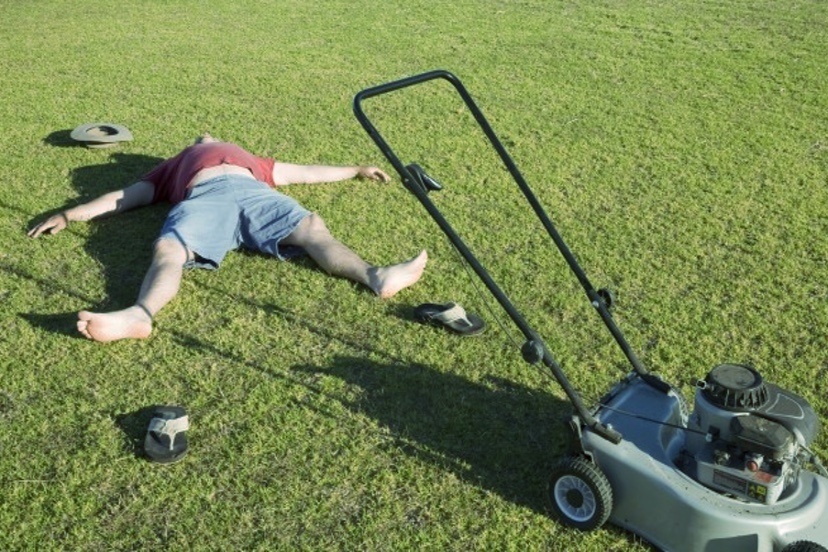
We’ll start right off with a disclaimer. Experts aren’t all they’re cracked up to be. Especially when it comes to lawn mowing.
For instance, we can easily tell, here in southern Colorado, when it’s time to stop mowing your lawn.
Because there’s two inches of snow on top of it.
The problem is, the gardening pros and experts typically live in San Diego or Houston, and while they may have gorgeous lawns, they’ve possibly never seen snow in their entire lives.
I’m going to share a sample of the advice you might get from a lawn expert, assuming you’re looking for advice. Or if your wife wants you to mow the lawn and you want an excuse not to. Experts can be handy to have around, when you’re looking for an excuse.
In this case, the advice is coming from Lauren Jarvis-Gibson, at TheSpruce.com. (Experts often have hyphenated last names, I’ve noticed.)
Since 2018, Ms. Jarvis-Gibson’s articles have appeared in publications like Allure, Teen Vogue, Best Life Online, PopSugar, HuffPost, and more. She also has two poetry books and a collection of essays currently available on Amazon and Barnes & Noble. She is currently working on her third poetry book.
So there. A poet who is also an expert in lawn mowing. Or at least, someone who knows how to quote experts.
I also consider myself an expert on lawn mowing, having over 30 years experience of waiting until my lawn is literally crying out to be mowed.
However, Ms. Jarvis-Gibson did not reach out to me for my opinion. She also did not reveal which “experts” and “gardening pros” she got her information from. Nevertheless, her advice sounded reasonable, if not exceptionally poetic.
Fall is here, and that means care for your lawn and garden will differ greatly from the spring and summer months. As colder temperatures roll in, it may be time to start prioritizing other gardening tasks and stop others like mowing your lawn.
Mowing your lawn isn’t just for superficial reasons or to be the best-looking lawn on the block. Mowing your lawn properly and frequently will help keep your grass at the right height, allowing nutrient absorption and deep root growth. It also helps prevent any insect damage and diseases in your yard. More so, mowing your lawn helps tremendously with weed control, so pesky weeds don’t take over your beloved yard during the spring and summertime.
And all this time, I thought I was just trying to keep my beloved wife happy. Of course, since the divorce, that’s not so much of a concern.
Although there is no “perfect” timeline, it’s suggested by experts to continue to mow your grass until you notice it not growing as rapidly. This will likely be around late October or early November when the temperatures drop below 50°F. But it depends entirely on where you live. For some climates, you can continue to mow your lawn until early December.
Turns out, when you’re no longer married, you can stop mowing your lawn in early April, shortly after the snow melts. I have to assume all the experts and gardening pros Ms. Jarvis-Gibson interviewed were still living in wedded bliss.
There’s some disagreement among the experts, apparently, as to the best height to keep your grass for the healthiest lawn. Some say 2 inches, some say 3 inches. Very few say 4 inches.
Almost no gardening pros will say “waist-high”. But I happen to be among them.
Another disclaimer: Although I consider myself an expert, I am completely self-taught when it comes to mowing lawns, Same with poetry.
Underrated writer Louis Cannon grew up in the vast American West, although his ex-wife, given the slightest opportunity, will deny that he ever grew up at all. You can read more stories on his Substack account.