
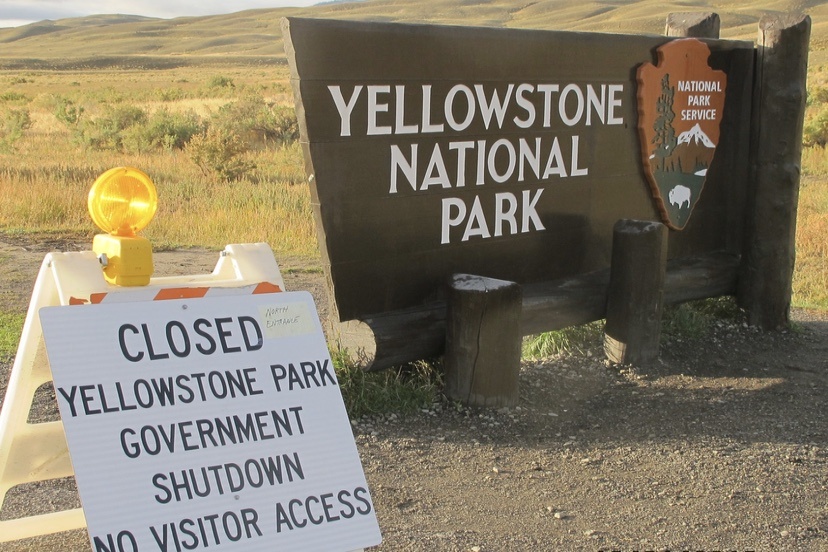
Photo: National Parks were closed during the 34-day federal government shutdown in 2013.
With Congress once again barreling toward a government shutdown, America’s parks and public lands are in a precarious position. The Trump administration’s illegal 2018–2019 decision to keep parks open with skeleton crews during the longest shutdown in U.S. history led to widespread and lasting damage — mistakes Interior Secretary Doug Burgum appears poised to repeat.
A costly experiment
During the 2018–2019 shutdown, the Trump administration broke with decades of precedent by keeping most national parks accessible while furloughing nearly 16,000 National Park Service employees. The results were both predictable and devastating. Across the country, parks saw overflowing toilets, mounting piles of trash, vandalism, illegal off-roading, and resource damage that in some cases will take centuries to repair.
Joshua Tree National Park became the poster child for the crisis.
“What’s happened to our park in the last 34 days is irreparable for the next 200 to 300 years,” former superintendent Curt Sauer told the Guardian. Rangers documented new roads carved into wilderness, Joshua trees cut down to make way for vehicles, and widespread illegal camping and fires.
Death Valley National Park saw similar chaos. Karen McKinlay-Jones, then chief law enforcement ranger, described being ordered to keep campgrounds open but restrooms closed — a recipe for disaster.
“We started having damage and we started having human waste issues. Everything that we told them would happen started happening,” she told the National Parks Conservation Association. Off-roaders drove through archaeological sites, trash attracted wildlife to visitor areas, and staff morale plummeted.
No accountability
The Trump administration’s approach was not just reckless; it was illegal, according to watchdog groups and the Government Accountability Office. The Department of the Interior diverted entrance fee funds, intended for maintenance and visitor services, to basic operations like trash removal and bathroom cleaning. This violated the Federal Lands Recreation Enhancement Act and left parks with even fewer resources for long-term needs.
“The law is clear,” said Rep. Betty McCollum, who oversaw Interior funding at the time. “If the federal government is shut down, our National Parks must also be closed to protect public safety and pristine spaces. It is not acceptable to use FLREA funds to keep the parks open, and the Department of the Interior’s actions likely violate appropriations law.”
Multiple groups called for the Inspector General to investigate, warning that “keeping national parks open with inadequate staffing during the shutdown violates multiple laws,” including the Antideficiency Act, National Environmental Policy Act, Endangered Species Act, and FLREA.
“During the government shutdown, we’ve seen terrible and sometimes irreversible damage to our national parks, including cut down trees, stolen artifacts, overflowing trash and human waste and illegal off-roading on fragile wilderness areas,” said Theresa Pierno, president and CEO of NPCA.
The Government Accountability Office concluded that the Interior department did in fact violate the Antideficiency Act during the 2018–2019 government shutdown. The GAO added that Interior was required to report this violation to Congress and the President, but did not. The GAO took it upon itself to notify congressional leaders directly and warn that future uses of this approach would be considered knowing and willful violations.
The impacts of a shutdown are not limited to natural resources, of course. Gateway communities that rely on park tourism lost hundreds of millions in revenue as visitors canceled trips or found parks in disarray. The Obama administration’s 2013 decision to close parks entirely during a shorter shutdown, while painful, protected resources and made the cost of congressional inaction clear. In contrast, the Trump administration’s violation of the Antideficiency Act left parks “open” but unprotected, creating a political and environmental crisis.
History repeating?
Now, as another shutdown looms, it’s unclear if Interior Secretary Doug Burgum is planning to repeat the mistakes of the past. “The parks didn’t have staff and there was overflowing garbage and sewage, vandalism that puts people at risk, and so I hope that doesn’t happen again,” said Phil Francis, chair of the Coalition to Protect America’s National Parks. Conservation groups are urging the administration to close parks to prevent a repeat of the 2018–2019 disaster, which threatened human lives as well as American treasures.
“During other shutdowns where parks were open… you put people in jeopardy because you don’t have search and rescue and you don’t have the available staff to help people,” said NPCA’s Kristen Brengel.
As the clock ticks down toward the government funding deadline on September 30, the lesson from last time is clear: keeping parks open without staff is illegal, irresponsible, and a recipe for disaster.
Feel free to reach out to me (720‑369‑9252) or my colleague Kate Groetzinger (254‑652‑0067) with any questions about the potential for a shutdown, or other public lands issues in the West. If we’re not the right people to talk to, we can usually point you in the right direction quickly.