
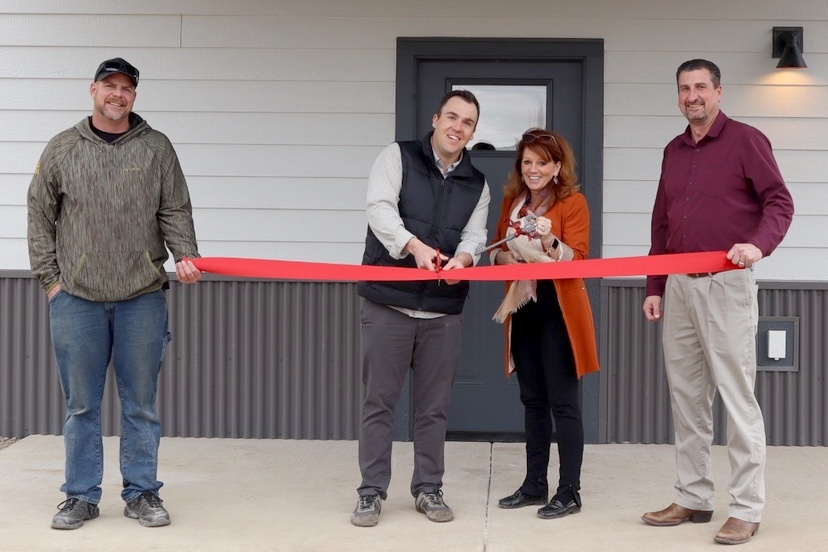
We respectfully request that PAWSD waive the Capital Investment Fees for Phase 2 of our workforce housing project. This project is not just about building homes — it’s about keeping the people who power our community right here in Archuleta County…
— from a Powerpoint presentation at the August 14, 2025 PAWSD Board meeting
It’s not unusual for elected and appointed government board members to disagree on important topics.
But I wonder if the people sitting in the audience at the Thursday, August 14 meeting of the Pagosa Area Water and Sanitation District (PAWSD) board were surprised… when a motion to support three new Habitat of Humanity of Archuleta homes — currently under construction — failed to get a majority vote.
Habitat has been building homes for working families in Archuleta County for three decades, and over the past four years has received support from numerous businesses and agencies, including PAWSD. According to an adopted policy, PAWSD has been waiving Capital Investment Fee (CIF) for ‘affordable housing’ within the district, for both water and wastewater hookups, for homes that are sold to households making less than 80% of the federally-established Area Median Income (AMI).
Last year, the Pagosa Springs Community Development Corporation (PSCDC) — also a nonprofit like Habitat — asked for and received waivers of both the water and wastewater CIF, for ten homes built during 2024.
You might say that it’s become something of a tradition for PAWSD to financially support affordable housing in Pagosa Springs.
Disclosure: I currently serve as a volunteer on the PAWSD Board, but this editorial reflects only my own opinions and not necessarily the opinions of the PAWSD Board and staff.
These PAWSD waivers have been partly funded by Affordable Housing Surcharges included in customers’ monthly water and sewer bills.
Prior to 2024, the waivers amounted to a few thousand dollars per home, but recently, the PAWSD Board greatly increased the CIF for both water and sewer.
The water CIF has increased from $5,363 to $9,227… a 72% increase…
…and the sewer CIF has increased from $1,179 to $16,168… a 1,270% increase.
PAWSD has also made steady increases to monthly customer bills for water and sewer service, but nothing as drastic as the CIF increases.
The new, much higher wastewater CIF fees are paid by new construction, and fortunately do not pose much of a problem to millionaires building million-dollar homes. Unfortunately, however, the CIF fees pose a considerable barrier to organizations like Habitat for Humanity and the Pagosa Springs Community Development Corporation when they attempt to build homes for working households.
The existing PAWSD policy allows the Board to waive the CIF fees, and
We might wonder why the provision of drinking water, and the treatment of wastewater, has become so expensive in recent years, when the basic processes have stayed the same and when the community’s population has not grown or shrunk noticeably. On the water side, the fee increases have been driven by the PAWSD decision to replace the aging Snowball Water Treatment Plant with a new state-of-the-art treatment facility capable of treating about three times as much water each day. The new plant will cost about $44 million and was funded by ‘revenue bonds’ and grants.
The enormous increase in the sewer CIF fees has been driven by a couple of factors. Back in 2012, PAWSD and the Town of Pagosa Springs entered into an agreement to build a seven-mile sewer pipeline to deliver the sewage from downtown Pagosa 500 feet uphill to the Vista Waste Water Treatment Plant. This decision ultimately resulted in the effluent from the plant surpassing a certain allowable limit — 1 million gallons per day — established by the Colorado Department of Public Health and Environment, and PAWSD was required to spend about $10 million to upgrade the Vista plant.
Additionally, previous PAWSD boards had allowed the monthly sewer rates and CIF to remain very low for too long, and had created a financial imbalance in the wastewater bank accounts.
A ‘rate study’ performed in 2023 by a consulting firm recommended a rather massive increase in sewer fees to keep PAWSD from going bankrupt.
Another factor in the mix is Regulation 31, a federal rule that could, in the future, greatly increase the cost of treating wastewater all across the country.
As mentioned, PAWSD has a policy — and a tradition — of waiving CIF fees for affordable housing projects, and covering the loss with Affordable Housing Surcharges paid by existing customers. Last year, the PAWSD Board granted waivers to Habitat for three new homes, to PSCDC for ten new homes, and to a 50-unit low-income apartment project called Timberline, now under construction near Walmart. The total amount waived for these projects far exceeded the amount collected in Surcharges during 2024, especially on the wastewater side.
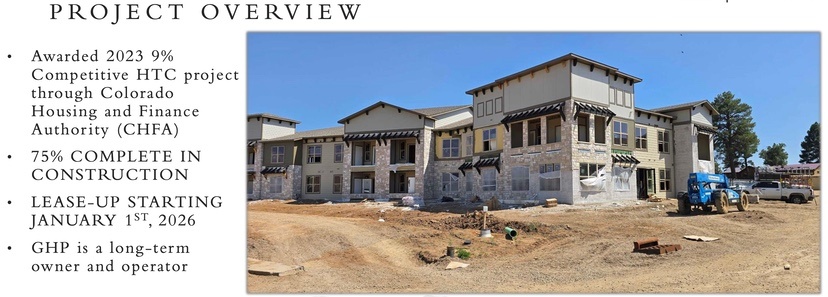
The August 14 meeting began with roll call and approval of previous meeting minutes, and then a representative of the Generation Housing Partners (GHP) made a request for an adjustment in the ‘base rate’ for the Timberline Apartments. Like many other water districts, PAWSD charges a ‘base rate’ that customers pay even if they use zero water during the month. For most homeowners and businesses, this rate is not too oppressive, but in the case of the Timberline project, the total ‘base rate’ will total $4,730 per month for the 50 units, some of which are tiny, one-bedroom apartments.
Can PAWSD reconsider how it bills for water, for affordable housing apartments? That question was discussed by the Board, and the decision was made to have a subcommittee look into the base rates charged to low-income housing projects.
Then Habitat Executive Director Leah Ballard stepped up to the podium, hoping for waivers for Habitat’s 2025 homes, similar to the waivers PAWSD has been providing since 2020.
That’s when it became quite evident that PAWSD Board members don’t always agree,