
Some of us have been sweating during the recent warm weather. Maybe all of us. It hasn’t been pleasant.
July has already been more humid than average, especially in the central part of the U.S., and now another, less obvious factor will enhance humidity this week.
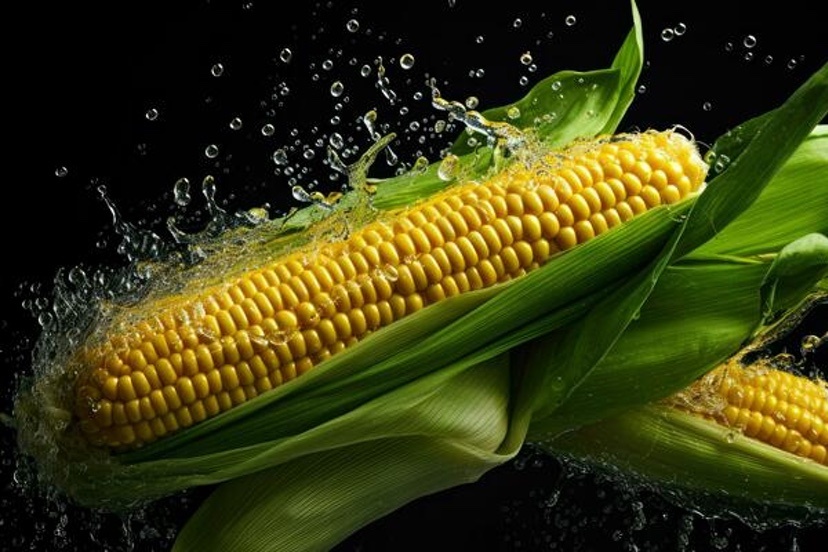
Corn sweat.
This week, meteorologists are predicting some of the country’s most dramatic heat and humidity indexes will be found in the Corn Belt, the part of the United States that stretches from the Dakotas to Ohio, possibly sending temperatures above 110 degrees. Maybe even 115.
And humidity is going to make things even less comfortable. Missouri, Minnesota, Iowa, Indiana, Illinois and the Dakotas are forecast to have humidity levels that rival or exceed Florida’s.
Even the corn will be sweating. And that only makes matters even worse.
Yesterday, the Washington Post shared a map indicating the unpleasantly high humidity levels, in purple, with a black border indicating — roughly — the area where the corn will be sweating the most profusely.

As we can see, most of Colorado will be safely outside the region of sweating corn. The majority of our corn is in grocery stores, where sweating is at a minimum, due in part to indoor air conditioning. Especially, corn flakes are expected to remain dry. Also corn meal.
But America’s Corn Belt is going to get hammered.
We humans sweat through sweat glands located over most of the body, creating a moist environment attractive to certain bad-smelling bacteria.
When corn gets hot, it releases moisture through its leaves. My research into corn sweat didn’t specifically mention any body odor problems. But there are other kinds of problems.
From the July 21 Washington Post article by Ben Noll:
According to Iowa state climatologist Justin Glisan, this is the time of the year when humidity contributions from corn sweat are highest — around the time of tasseling and pollination, when the flower emerges from the corn stalk.
He described the phenomenon as being thick and oppressive, particularly if there is no wind — “like being fully clothed in a sauna or steam room.”
One would think that, with all the technological advances of modern science, someone would have invented an antiperspirant for corn.
The U.S. is the world’s largest producer of corn, with about 84 million acres of land dedicated exclusively to corn cultivation. Overall production of corn in the U.S. was 15.1 billion bushels for 2021, and about 17 percent was fed to animals, with a smaller percentage made into ethanol.
The majority (about 56%) was exported to other countries.
We have to put up with the sweating corn, while other countries sit back and relax in a less humid climate.
Doesn’t seem fair.
No make matters even worse, corn has been subsidized by the government since the 1930s. U.S. subsidies for sweaty corn averaged 4.7 billion dollars per year, between 1995 and 2014.
As far as I can determine, absolutely zero dollars went into corn antiperspirant.
Just to be clear, I do not assign any blame to the corn itself. Corn has its biological imperatives, and when it gets hot, sweating is one of them.
But someone has to get the blame. I blame the government.
Underrated writer Louis Cannon grew up in the vast American West, although his ex-wife, given the slightest opportunity, will deny that he ever grew up at all. You can read more stories on his Substack account.