
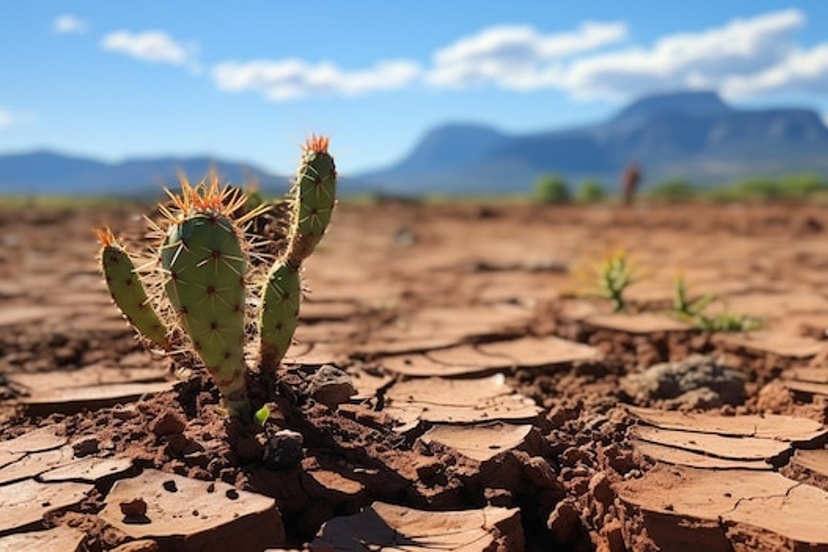
As drought conditions have intensified in Utah this summer, and as wildfire risks have escalated, Utah Governor Spencer Cox declared Sunday, June 29, as a Day of Prayer and Fasting for Rain in the state.
“Utah is facing a tough season, and we need both divine help and practical action,” Cox said, according to a press release from the governor’s office. The governor reached out to faith leaders statewide, encouraging them to share the invitation with their diverse congregations.
Clearly, there’s a time and place to pray for divine intervention, even if we don’t all worship the same God. And fasting is probably a good idea as well.
I wasn’t exactly praying during yesterday’s June 3 special meeting of the San Juan Water Conservancy District board of directors, but I was trying to remain hopeful. The SJWCD immediately went into executive session, and directed the public to leave the meeting room and enjoy chairs set out in the Cascade Plaza lobby.
For the next hour and 15 minutes, the SJWCD board presumably discussed the most recent offer from Zipper Valley LLC. A couple of weeks ago, Zipper Valley had an offer on the table, to purchase the Running Iron Ranch from Pagosa Area Water and Sanitation (PAWSD) for $10.4 million, and dedicate a public easement in the center of the ranch for a future reservoir, to be designed and financed mainly by SJWCD. The easement would be large enough for a 3,000 acre-foot reservoir — about twice the size of Lake Hatcher. Zipper Valley also offered to work with SJWCD to fund grant writing and engineering for the future Dry Gulch Reservoir.
At the joint PAWSD-SJWCD meeting on Monday, the SJWCD board had unanimously expressed a lack of interest in working with Zipper Valley.
The next day, Zipper Valley offered to increase the size of the public reservoir easement to 11,000 acre-feet, which would match the size of the Dry Gulch water rights currently held by SJWCD.
Thus, my hopeful attitude as I sat in the Cascade Plaza lobby with two other members of the public.
Our casual hour-long conversation out in the lobby turned out to be surprisingly lively, and the time fairly flew by, until SJWCD board member Susan Nossaman opened the office door and invited us back into the meeting at 2:24pm. Board president Candace Jones set about explaining the reasons why the SJWCD board — apparently, unanimously — had to once more reject the opportunity to work with the only potential partner to show up at their door since 2012 when PAWSD bowed out as a Dry Gulch Reservoir partner. One of the objections to the offer was the requirement that SJWCD actually show progress during the next ten years in obtaining grants. Ms. Jones explained that the design and construction of a reservoir doesn’t happen overnight.
“I think even some members on the PAWSD board have acknowledged that reservoir planning and construction is not something that happens in two or three years. It happens over a very long period of time, so to put [SJWCD] under the gun to do something in two or three years… which everybody can look at and say, that’s not the time frame it takes to build a reservoir… is really not a fair or appropriate place to expect this board to concede.”
It’s very true that reservoirs sometimes take decades to get built. More than half the conditional water rights that SJWCD holds for the Dry Gulch Reservoir were originally acquired in 1967. The rest were acquired in 2004. So SJWCD has had more than 20 years to plan, design, and construct the Dry Gulch Reservoir. Unfortunately, as of the summer of 2025, they do not yet have a single engineering drawing, nor a penny of grant funding for the reservoir…
…nor even a vague indication of a willing financial partner. Other than Zipper Valley, I mean.
We’ve considered the fact that the largest reservoir ever built in the U.S. — Lake Mead — is currently less than one-third full. Reportedly, 25 million people in California, Arizona and Nevada count on Lake Mead for municipal, industrial and agricultural water. But some scientists fear Lake Mead will become a ‘dead pool’ within the next ten years or so.
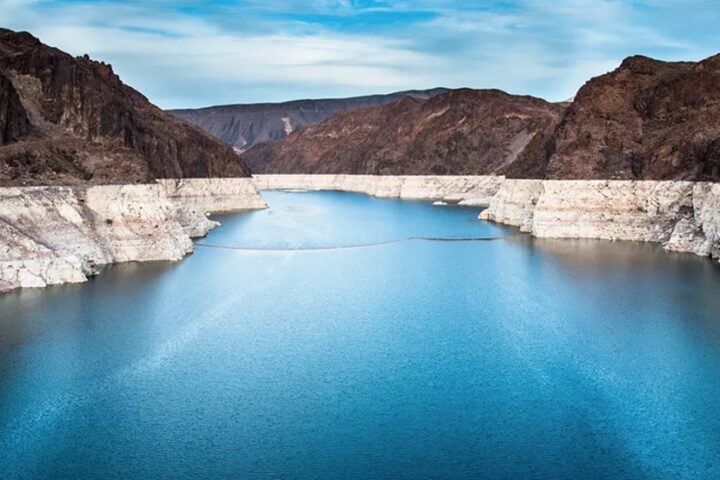
The problem isn’t just a relative lack of precipitation over the past 20 years. The real problem is that California, Arizona and Nevada have been extracting more water out of Lake Mead than the Colorado River has been delivering.
If people had simply cut back on water use, to match the resources available, Lake Mead might still be full today, as it was in 1983.
It’s not too late.
To cut back, I mean.
Lake Mead doesn’t have to become a dead pool.
Some communities have been surprisingly successful at cutting back on water demand. Take Los Angeles, as an example.
In 1990, when its population was 3.4 million people, Los Angeles’ annual consumption was 680,000 acre-feet of water, according to the city’s water authority. Today, with a larger population — 3.9 million people — the city consumes only 454,000 acre-feet per year. Per capita water demand is down by a whopping 43 percent since 1990.
The little rural town of Pagosa Springs, Colorado has seen a similar pattern of falling municipal water demand. In 2001, with a county population of about 10,450, PAWSD sold about 1,800 acre-feet of drinking water. Last year, PAWSD sold about 1,300 acre-feet of water to a county population of 14,500. Per capita water demand is down by a whopping 47 percent since 2001. Even better than Los Angeles.
But in the case of Pagosa Springs, it appears to be too late to prevent the proposed Dry Gulch Reservoir from remaining, forever, a dead pool.