
The San Juan Water Conservancy District has scheduled a special meeting for today at 1pm at their office at 46 Eaton Drive, Suite 5, to discuss an ongoing lawsuit related to a 660-acre property jointly owned by our two local water districts — Pagosa Area Water and Sanitation District (PAWSD) and San Juan Water Conservancy District (SJWCD) — and formerly known as the Running Iron Ranch.
It’s a public meeting, but the agenda suggests the SJWCD Board will enter into executive session for the first portion of the meeting, and will close the door to the public. The Board might follow the executive session with decisions made in public, regarding the lawsuit or other matters.
Disclosure: I currently serve as a volunteer member of the PAWSD board, but this editorial reflects only my own research and opinions, and not necessarily the opinions of the PAWSD board and staff.
As mentioned in Part One, the SJWCD has been offered an easement for the Dry Gulch Reservoir, and financial help to fund the reservoir, from a Texas company called Zipper Valley Ranch LLC. Zipper Valley would like to purchase the Ranch for about $10.4 million, which amount would pay off the loan PAWSD originally borrowed to buy the Ranch. The easement would be located roughly in the center of the Ranch, and would be provided to SJWCD free of charge, so long as SJWCD can meet certain progress mileposts.
So why are we talking about ‘dead pools’?
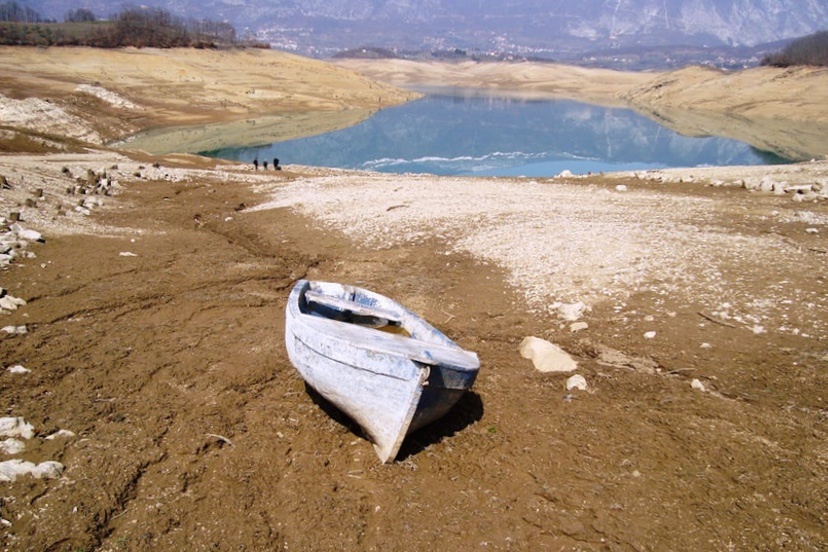
When discussing water reservoirs, a ‘dead pool’ generally refers to a reservoir where the water level has fallen so low, it can no longer deliver water to its customers, or in some cases, can no longer generate hydroelectricity.
Some scientists are predicting that, due to climate change and other factors, the two largest reservoirs in the U.S. — Lake Mead and Lake Powell — may become ‘dead pools’ within the next decade.
This would likely cause the swimming pools in Phoenix, Las Vegas, and Los Angeles to also become ‘dead pools.’
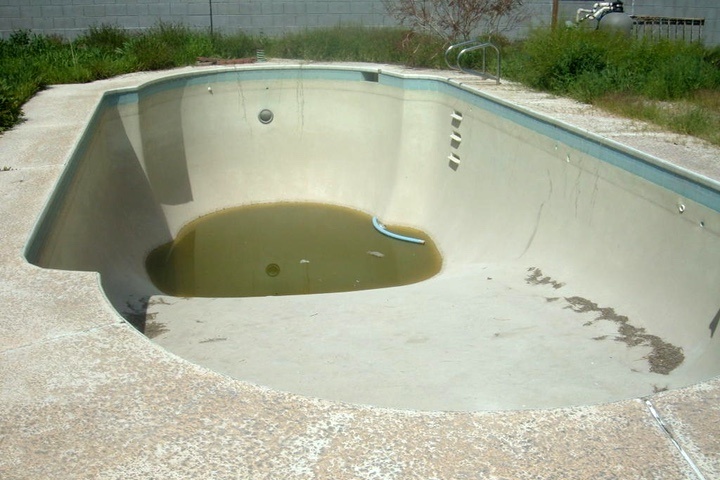
But there might also be other types of ‘dead pools’.
For example, we might be tempted to refer to a proposed reservoir that has been sketched out on paper maps since 2003, but still has no engineering drawings, nor any prospective source of funding, nor any sign of broad community support, as a ‘dead pool’.
On Monday, June 30, board members from our two local water districts — Pagosa Area Water and Sanitation District (PAWSD) and San Juan Water Conservancy District (SJWCD) — met at the PAWSD office at 100 Lyn Avenue to discuss the creation of a new reservoir.
The Zipper Valley offer, first made to SJWCD in November, expires on July 11. The SJWCD Board has consistently refused to meet with Zipper Valley to discuss how Zipper Valley might modify and improve its proposal.
Candace Jones, the SJWCD Board president, opened the joint meeting with a rather lengthy discussion about a land use and water use modeling application called POLARIS — Planning and Operations for Land and Resource Integrated Systems — developed by Catena Analytics. According to queries posted to three AI applications, it appears that POLARIS has not yet been peer-reviewed, and may not ever be peer-reviewed, because it’s being developed by a private corporation.
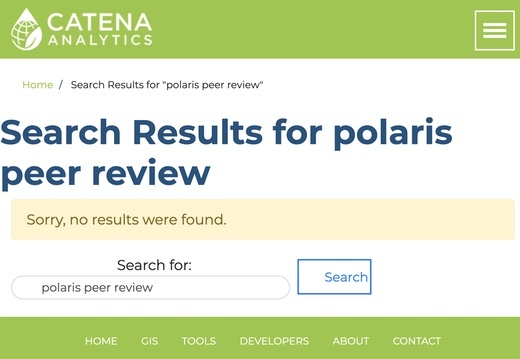
A search for “polaris peer review” on the Catena Analytics website seems to confirm the lack of any peer review of the modeling tool.
In 2022, meanwhile, the engineering firm called Wilson Water Group was engaged by SJWCD to develop estimates of long-range water demand within the water district, at a cost of $19,000. Wilson Water Group spent about six months researching the specific water issues in Archuleta County, and came to the conclusion that — based on the current population growth rate in Pagosa Springs — the community might require additional reservoir storage, in 2050, amounting to around 1,600 acre-feet, to meet municipal demands.
PAWSD currently has around 4,000 acre-feet of reservoir storage, but about 1,775 acre-feet in Steven Reservoir is not connected directly to a treatment facility. That new connection is currently in the planning stages. PAWSD also has water rights allowing it to draw about 3,600 acre-feet per year from the West Fork of the San Juan.
PAWSD typically sells less than 1,400 acre-feet of drinking water per year… meaning that the West Fork diversion all by itself could supply twice the water needed by PAWSD customers.
For whatever reasons, a previous SJWCD Board read the Wilson Water Group report and concluded that Archuleta County will actually need 11,000 acre-feet of additional storage in 2050. The current SJWCD Board continues to hold that opinion.
There are granting agencies and water agencies that help communities design and build water reservoirs, but typically, these agencies want evidence that the subject community is broadly in support of the project, and willing to help fund the project, which in this case has been vaguely estimated, on various occasions, as costing $100 million to $150 million.
In 2018, SJWCD went to the voters, asking for an increase to their property tax mill levy of about 0.6 mills to move the Dry Gulch Reservoir project forward. That would have increased the SJWCD budget from about $90,000 a year to about $270,000. The measure was rejected by a 3-to-1 margin.
I mention this to suggest that perhaps SJWCD does not currently have broad community support for their reservoir project.
In spite of the lack of community support, and the lack of any known source of funding to finance a $100 million reservoir, the SJWCD Board has consistently refused, since November, to meet with Zipper Valley to discuss a potential win-win-win partnership.
The “win” for PAWSD customers would be to be completely relieved of an ongoing $10.4 loan obligation. By refusing to sit down with Zipper Valley, SJWCD has left that $10.4 million burden on the shoulders of PAWSD customers.
As noted, SJWCD will hold a special meeting today, June 3, at 1pm.
What might be the outcome?
A ‘dead pool’?