

The process of writing this editorial series has caused me to wonder if I understood what, exactly, people mean when they use the words “Liberty” and “Justice”. What do they mean when, for example, at the beginning of a Town Council meeting, they recite the Pledge of Allegiance? As they face the American flag, with their hands over their hearts, and speak the words…
…with liberty and justice for all.
We can begin with the word, “liberty”, for instance. What does that word mean to Americans?
I spent some time, yesterday, perusing the Oxford English Dictionary. Many of our words — if we are English speakers — evolved during invasions of the British Isles by Germanic, Norse, and French hordes, and many of our political ideas arrived in the same way. In the case of ‘liberty’, the word and the related concept likely arrived in 1066 along with the Norman conquerors, who used the word liberté mainly in the context of “freedom from tyrannical rule and oppression”.
But the word can also be used to indicate “freedom from bondage, slavery” and “freedom from imprisonment’ and “freedom from sin.”
In other words: freedom from this or that unpleasant condition typically imposed from without.
One might be tempted to use the word to imply “freedom from taxes”. But of course, that will never happen.
The French have historically put a high value on liberty, having chosen as their national motto: “Liberté, Égalité, Fraternité”.
Liberty, Equality, Fraternity.
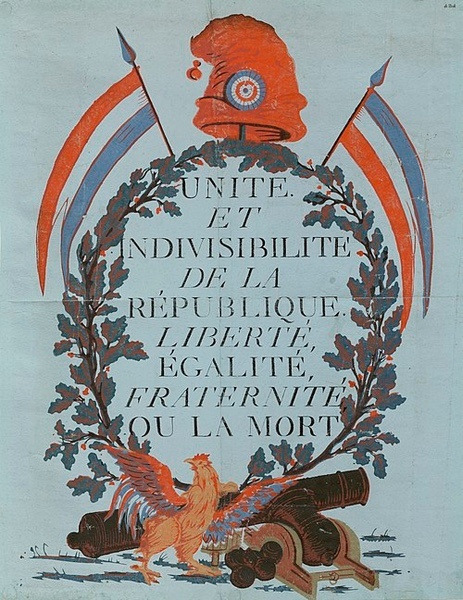
“…OU LA MORT”
“…Or death.”
In 1787, when the Constitutional Convention presented the new U.S. Constitution for possible ratification by the 13 former British colonies — now, the newly independent States — the idea of liberty featured prominently in the document.
One thing that didn’t seem to be too important to the Founding Fathers in 1787: equality.
The authors of the Constitution drew their ideas about government largely from the British system, which limited participation in government to only wealthy male property owners, which amounted to about 1 percent of the population in the U.K. America’s Founding Fathers were perfectly fine with the idea that only owners of property — notably, the business and financial elites, and the plantation owners — would be allowed to vote and dominate the future government…
…while other people — the working poor, women, and people of color — would not be allowed to directly participate in government.
The idea of ‘equality’ didn’t figure in the U.S. Constitution until 1870, almost 100 years later, when the 15th Amendment granted African American men the right to vote. But many Blacks were unable to exercise this right, because some states, especially in the South, used literacy tests and other barriers to make it harder to vote.
50 years later, the 19th Amendment finally granted women the right to vote.
44 years later, the 24th Amendment eliminated poll taxes, which been used in some states to keep Blacks from voting in elections.
Then we come around to “Justice”, a word that — like “Liberty” — has a range of possible meanings. For example, it can refer to rewards or punishments dispensed in a court of law, whether morally and ethically correct or not. The word can also imply a system of government that treats all citizens fairly and justly. I assume most people, when reciting the Pledge of Allegiance at a Town Council meeting, probably have the second definition in mind, given that the word “justice” is followed by the words “…for all.”
In this editorial series, I’ve also referred to some political decisions pending in our community. In Part Two, I mentioned a dispute about how property owners may and may not use their rural property. In Part Four, we touched briefly on the approval process for a proposed subdivision development near the Pagosa Springs Medical Center.
How are these decisions made? How are the disputes resolved? Do we live in a community based on liberty and justice?
Another decision is pending at Town Hall, and certain voters may play a role in settling the matter. We’re talking here about a struggling sanitation system operated by the Town government, and funded by the businesses and residents living within the Pagosa Springs Sanitation General Improvement District (PSSGID). The district is government by the Pagosa Springs Town Council, which has been steadily increasing customer fees over the past 20 years.
Practically speaking, the PSSGID customers have had zero control over the fee increases, except that the Council members are themselves customers of the District.
But things have now grown serious enough that the Town Council might give the District customers a say in the matter, beginning with a tool known as an ‘online survey’.
You can access the survey here.
From the survey introduction:
The Pagosa Springs Sanitation General Improvement District (PSSGID) plays a crucial role in managing wastewater treatment and sanitation services for residents within the PSSGID…
The current sewer system has significant issues of concern to the Town. About $80–$100 million is needed to fix the aging pipes, build a new wastewater treatment facility, maintain the existing forced main for redundancy, and make other facility repairs and upgrades, including the installation of a new lift station and recycled water system. Pagosa Springs faces significant hurdles in addressing its sanitation infrastructure issues long-term, which is why the Town Council is considering new funding options to help pay for critical and long-neglected repairs.
There are a couple of good reasons why the critical repairs have been “long-neglected”.
The Town government has, for the past 30 years, considered itself to be an “economic development” engine with a responsibility to spend millions of dollars on promoting tourism, recreation, and other businesses. The staff has been tasked with creating new parks, river enhancements, walking trails and other ‘recreational’ features, and with developing a strong tourism marketing program. The Town had less focus on maintaining a slowly failing sewer system than might have been appropriate.
Also, a sewer system is mainly buried underground. Out of sight, out of mind.
Then the Town Public Works Department bought a video camera capable of documenting the conditions of the underground system.