
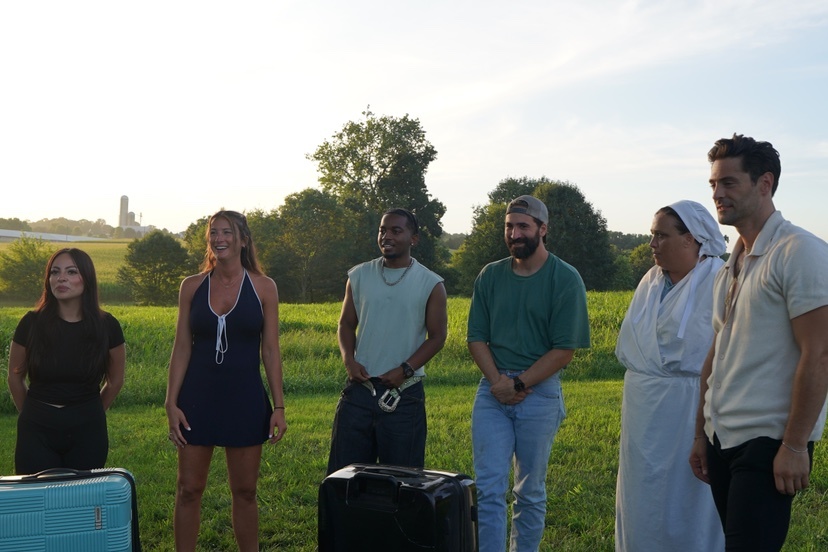
Photo: Six “English” arrive in Lancaster, Pennsylvania, to join an Amish community in “Suddenly Amish” (2026). (Credit: Warner Bros.)
This essay by Anya Petrone Slepyan appeared in The Daily Yonder on March 19, 2026. A version of this story also appeared in The Good, the Bad, and the Elegy, a newsletter from The Daily Yonder focused on the best, and worst, in rural media, entertainment, and culture. Every other Thursday, it features reviews, retrospectives, recommendations, and more. You can join the mailing list at the bottom of this article to receive future editions in your inbox.
Love it or hate it, I believe reality television is one of America’s most important cultural products. I don’t say that because the genre itself is particularly venerable – I find most shows, even the genuinely entertaining ones, to be undignified at best, and offensive and exploitative at worst. So where’s the value?
The genre’s reliance on heavy editing, interfering producers, and staged drama means that most individual shows have very little “reality” to offer their viewers. But taken as a composite, reality shows offer a fascinating – and often unflattering – insight into our culture. This has as much to do with the audience’s appetite for certain shows as it does with the content itself. “Keeping Up With the Kardashians” is heavily produced and scripted, but its viewers’ interest in fame, wealth, and celebrity personalities is authentic.
The same can be said of any number of reality shows and sub-genres, from dating shows (“Love is Blind,” “The Bachelor/Bachelorette”) to the once-popular weight loss and makeover shows of the early 2000s (“The Biggest Loser,” “What Not to Wear”). These shows and their loyal audiences speak to some of our collective obsessions: romance, connection, and physical appearance. Whether we’re true fans or just ritually hate-watch with our friends, the shows that capture our attention say something about our personal and societal preoccupations.
One of these preoccupations, it seems, is the Amish. Shows like “Breaking Amish,” “Amish Mafia,” “Return to Amish,” and “Amish in the City” purport to offer viewers insights into the lives of Amish community members. The latest offering on the Amish media buffet is TLC’s “Suddenly Amish,” which wrapped up its first season on March 3rd. The ridiculous name foreshadows the absolute silliness that consumes much of the show’s eight episodes.
The premise is that a shrinking Amish congregation in Lancaster, PA, invites six “English” (non-Amish) people to attempt to join the community. (I’ll talk more about the show’s shameless inauthenticity, but the first gaping hole is the implication that the Amish community is in danger of dying out, which ignores the fact that the Amish population has more than doubled since the year 2000). For a month, the newcomers are taught Amish practices: dressing plainly, doing farmwork, attending church services, and even attempting to date “the Amish way.” The show culminates with “Reckoning Day,” when the participants are evaluated by the community and decide if they want to go back to their normal lives or continue their conversion.
The six participants start out eager for a simpler life, where community and spiritual connection replace the stress and isolation of modern living. But drama quickly ensues as it is made apparent that they’ve done little to no research on what being Amish actually entails. The cast also seems to be almost uniquely unfit for the process: a divorcee, a former OnlyFans model, a bisexual man, and a teacher who relies on hearing aids that connect to his cell phone are among those seeking to join the sect, which is famous for both its eschewal of modern technology and strict adherence to biblical mores.
But of course, the English aren’t the only people featured on “Suddenly Amish.” The show also depicts “Amish” hosts who are there to help the outsiders integrate into the Amish way of life. This is where the show hits a major snag, as far as realism is concerned. Most Amish communities follow a strict set of rules, or Ordnung, which outline the norms for everyday life. As you can imagine, a culture that chooses to use horses and buggies over cars and prohibits the use of televisions, the internet, and cell phones is unlikely to participate willingly in a reality TV show.
So who are the people claiming to be Amish?
The leader of this process (and the chief antagonist of the show) is James, a young man who is supposedly helping the English in order to get back in the good graces of his community after being shunned. James’ cousin Emma also helps out, as do Allen and Sarah – a genuinely lovely couple whose presence in this train wreck of a series is both soothing and mystifying. Allen’s brother, Bishop Vernon, offers guidance and sets the whole “mission” in motion. Some quick internet sleuthing revealed that James was raised in a strict order of Mennonites, and Emma grew up in an Amish community, but both have since left those churches. Their considerable social media presences reveal that their roles in the show were pure fiction. Other internet users claim to know Allen, Sarah, and Bishop Vernon as formerly Amish as well, though I haven’t been able to verify their current status or community affiliation.
The revelation that there is little reality in “Suddenly Amish” probably isn’t shocking to anyone – 30 years of reality television has hopefully taught audiences to take these portrayals with buckets of salt. Products of TLC are especially known for their dramatized conflicts and unethical methods. Reality TV is an ugly business, and in comparison to decades of platforming exploitation and abuse, having formerly Amish or Amish-adjacent people pretend to represent the community seems relatively innocent.
But for those concerned with how rural people and communities are portrayed in mass media, the narratives reinforced by “Suddenly Amish” still feel plenty harmful. Despite the English participants’ professed admiration for the Amish, they spend most of their time struggling against the norms imposed by their “Amish” hosts. This culture shock is the main point of the show, painting an unsympathetic picture of the community’s strict social rules and physical demands. “Amish” hosts Allen and Sarah do come off as kind and compassionate people. But their tolerance of the outsiders’ differences, including one participant’s bisexuality, is cast as exceptional within the community.
The lead “Amish” spokesperson, James, is almost cartoonishly villainous. He’s petty, vindictive, and hypocritical – and explicitly invokes Amish Ordnung as justification for his poor behavior. The Amish way of living, seen through the eyes of the English, is portrayed as backwards, unpleasant, and arbitrary. The show does stress some positives, like connection with nature and freedom from the frantic rhythms and spiraling problems of modern life – one participant extolls the virtues of cloth menstrual pads as being environmentally friendly and free from microplastics – but these ‘pros’ still feel superficial and reductive. The show gleefully sets up the Amish as an embodiment of the most extreme rural stereotypes, while operating entirely under false premises.
Notably, the Amish reality TV sub-genre inherently targets a community that can’t fight back. Of course, reality TV networks rarely “pick on people their own size” (Kardashians/Jenners aside), but this disparity feels especially egregious considering that most Amish will never see the show, never mind have a platform where they can push back on TLC’s narrative. The Amish have their own ways of storytelling – I recently became aware of the genre of Amish romance novels when visiting an Amish buffet, craft store, and book shop in Pennsylvania – but in the world of mass media, networks like TLC control people’s perceptions.
None of this is new. Rural communities writ large, and the Amish specifically, have been misrepresented on reality television for decades. Shows like “The Simple Life” and “Duck Dynasty” each packaged their own particular version of rural America for consumption by the rest of the country. And while that is unlikely to ever go away (a new “revival” season of “Duck Dynasty” is airing now), it’s worth thinking critically about what the shows we make, and the shows we watch, say about how we see ourselves and our neighbors. As far as our media diet is concerned, we are what we eat.
This article first appeared in The Good, the Bad, and the Elegy, an email newsletter from the Daily Yonder focused on the best, and worst, in rural media, entertainment, and culture. Every other Thursday, it features reviews, recommendations, retrospectives, and more. Join the mailing list today to have future editions delivered straight to your inbox.
This article is republished here under a Creative Commons Attribution-NoDerivatives 4.0 International License.