
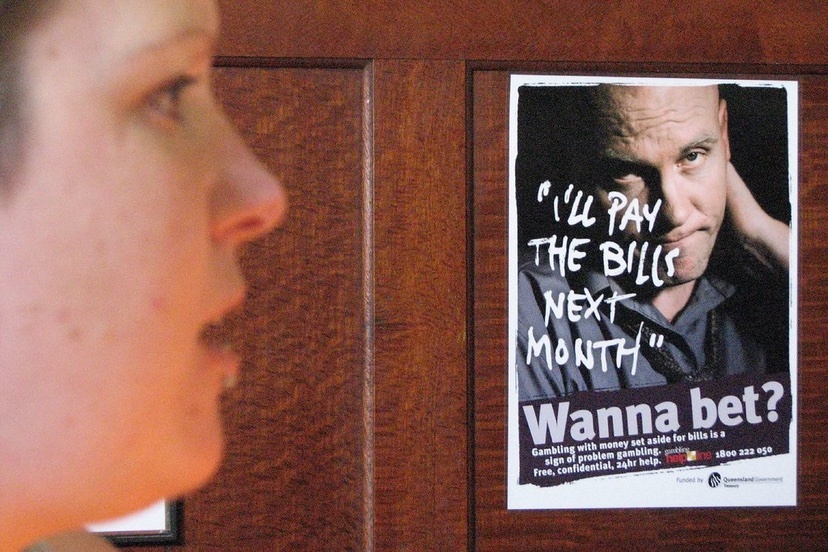
All players should enjoy gaming as a form of entertainment while staying in control of their play. Setting limits, knowing the risks, and recognizing when to take a break are essential steps to maintaining a healthy gaming experience.
I noticed something interesting yesterday about Colorado’s so-called ‘gaming industry’.
Gaming experts from the Colorado Division of Gaming and the Colorado Lottery celebrated the state’s efforts to address “problem gambling” during an event at the state capitol in Denver.
March is, after all, ‘Problem Gambling Awareness Month’ — 31 days during which we can think about, and be aware of, problem gambling. But this celebration took place specifically on March 5, ‘Problem Gambling Awareness Day’. We have the “Day” and we have the “Month”. So we have the option to celebrate for a single day, or all month long.
The interesting thing I noticed:
When the gaming industry is talking about how much money they are taking in from problem gamblers — to be used for various government purposes — they use the word “Gaming”.
When the gambling industry is talking about the problem gamblers, however, they use the word “Gambling”.
That is to say, when state-sponsored gambling is benefiting the state, it’s just an innocent, enjoyable game you’re playing.
When it’s destroying your marriage, your career, and your life generally, it’s called “gambling”.
From Division of Gaming Director Christopher Schroder:
“For the Colorado Division of Gaming, our mission to uphold the integrity of the state’s gaming industry goes hand-in-hand with our dedication to player health. By actively promoting awareness and providing accessible resources, we ensure Coloradans have the support they need to game responsibly.”
Reportedly, the Colorado Lottery is one of the few lotteries across the nation to have a full-time dedicated player health manager, as of 2024.
There’s also help available from the National Council on Problem Gambling. You can click this button.
The Colorado Lottery celebrated its steadily increasing revenue in a 2024 press release, when they collected $900 million from problem (and non-problem) gamblers.
“Our goal to become a $1 billion lottery is in our sight with this year’s tremendous revenue success,” said Tom Seaver, Director of the Colorado Lottery… As our revenue grows, so does our responsibility. Our new player health manager will help us ensure that we grow responsibly with our players’ health at the forefront.”
We would probably be perfectly comfortable with this growing problem, if it were only adults destroying their lives.
But it seems that various online gambling websites have been attracting the attention of children. From a 2021 study published by the National Institutes of Health:
Gambling appears to be exceedingly common among adolescents. For example, Rasanen et al. reported that as many as 50–80% of Nordic adolescents gambled in the past year, despite it being illegal to gamble in most Nordic countries before the age of 18. Similar trends have been reported in other parts of the world, such as Canada, the United States, the United Kingdom, and Australia… Gambling is now one of the most frequently reported addictions among young people…
Adolescent problem gambling can lead to many complex problems, such as criminal behavior, poor academic achievement, school truancy, financial problems, depressive symptoms, suicide, low self-esteem, deterioration of social relationships, and substance abuse…

According to a story on 11Alive.com, the owner of a gambling recovery hotline, Arnie Wexler, recalls he started gambling at seven years old, making money with baseball cards and horse races. “It became a bigger problem as I got older,” he said. Wexler spent decades hooked on gambling, recalling the life moments that were lost to his addiction.
Wexler placed his last bet on April 10, 1968, and has since launched a gambling recovery hotline: 1-888-LAST BET.
He’s been increasingly inundated with calls about young people hooked on gambling.
“The calls are coming in like crazy from parents of young kids that are getting addicted to gambling. Kids are doing it in elementary school today. It’s a disaster.”
Thirteen-year-old Liam, a fake name to protect his identity, has been gambling on a sports betting app for several months. He said several of his friends are doing the same. He uses an app called Sleeper, which “requires” age verification, but Liam said it was easy to circumvent.
“You don’t have to really show an ID; you just use somebody else’s,” Liam said. “It makes it really easy for younger kids; you can just take your mom’s or your dad’s or a family member’s, and then you can spend however much you want, if you have the money.”
Dr. Adam Goodie, Director of the Georgia Gambling and Decision Lab, says there’s been a notable trend of young people gambling, particularly in the last few years. He explained that gambling is the only officially recognized addiction that is classified as a “behavioral addiction”, which may be why it doesn’t get as much attention.
“All of the other official addictions involve putting a substance in your body: Alcohol, tobacco, marijuana, cocaine, heroin and others, except for gambling. But what they have in common is triggering a pleasure response in the brain.”
Les Bernal is the National Director of Stop Predatory Gambling, a 501c3 non-profit based in Washington, DC, working to raise awareness about the pitfalls of commercialized gambling.
“We have an epidemic of teen and pre-teen gambling today in our schools; it’s out of control,” he said. “If this was any other predatory business exploiting our young people, you’d have state attorneys general stepping in to protect the public, especially kids…”
“That’s not happening here.”
Thirteen-year-old Liam says he knows he shouldn’t be gambling. “They just want you to keep consistently spending money. It just gives you a feeling that makes you feel like you’re on top of the world.”
The National Council on Problem Gambling operates the National Problem Gambling Helpline Network, offering local resources for those seeking help for a gambling problem. The number to call is 1-800-GAMBLER.
Or click this button.