
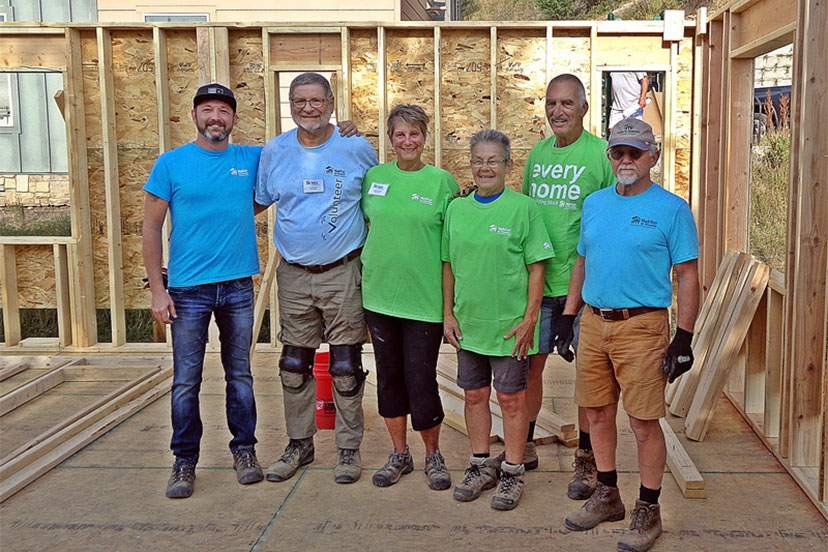
Photo: Habitat for Humanity volunteers from Florida, helping build a house in Pagosa Springs, summer, 2021.
As stated earlier in this editorial series, I admit to having a fascination with workforce housing, ever since Archuleta County helped fund a ‘Housing Needs Assessment’ back in 2007, when we could see the housing crisis approaching. It’s become obvious, since that time, that meeting the challenge is far from a simple matter.
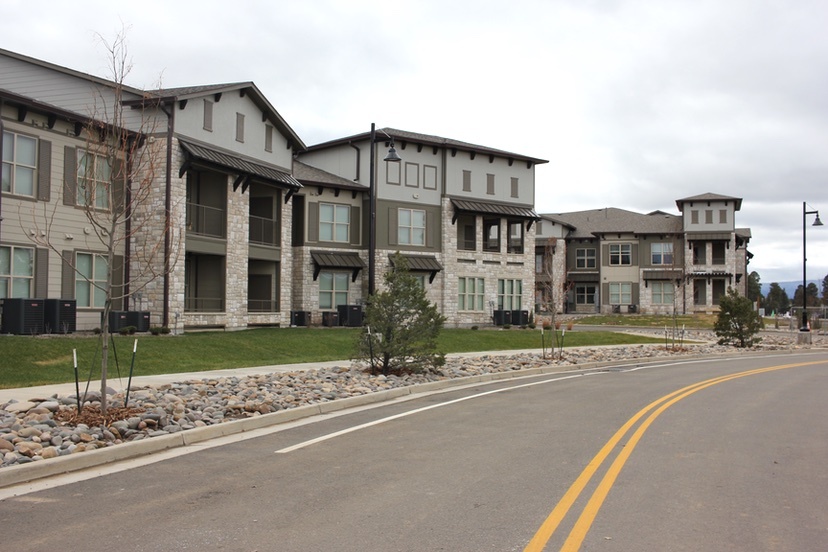
The Town of Pagosa Springs has made numerous policy changes in recent years, in an attempt to encourage affordable housing within the town, with limited results. The Rose Mountain Townhomes on Hot Springs Boulevard — 34 units serving families earning 30%-60% AMI, with a mix of one, two and three bedroom units — was built with the help of federal LIHTC tax credits, as is the case with the 50-unit Timberline Apartments near Walmart, currently nearing completion — also, with a mix of one, two and three bedroom units.
The marketing pitch for Timberline:
Homes That Fit the Way You Live
Timberline Pagosa Springs is nestled among the majestic San Juan mountains, near the San Juan and Piedra rivers, and surrounded by lush forests of Lodgepole pines and Douglas fir. Quiet streets lead to charming local shops and restaurants, while scenic trails and relaxing hot springs are just minutes away. Here in Pagosa Springs, you will discover a warm sense of community and belonging, all set against the peaceful rhythm of mountain life.
They are actually Ponderosa pines, but close enough. And yes, some of the nearby streets are relatively quiet, and some of the shops and restaurants are charming. But more importantly, perhaps, the families that qualify to occupy these apartments will not have to pay more than 30% of their monthly income for rent. Compare that against the much larger number of working households in Pagosa who pay 50% or more of their income for housing — placing those households in the “Severely Cost Burdened” category.
When the Town of Pagosa Springs and the Archuleta County government funded a Housing Needs Assessment last year, as required by a new Colorado state law, the resulting study included the chart below.
We can look at the “AMI” segment in most serious need of help. “Low Income, 51-80% AMI”.
An estimated need for 344 new units in that price range, in order to “Keep Up” with a growing economy. But we note that they are all assumed to be “rental units”.
At higher income levels, the needed housing is split between “owner units” and “rental units”.
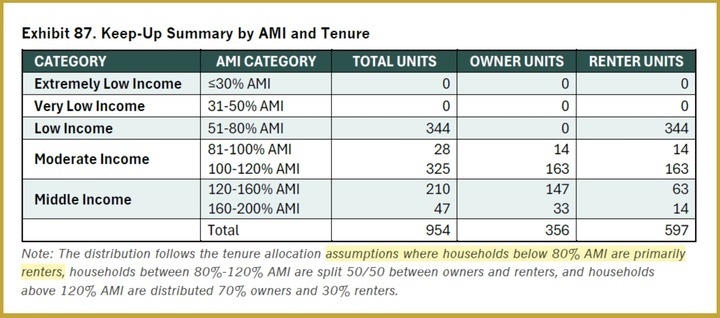
Leah Ballard, Executive Director at Habitat for Humanity of Archuleta County, included this chart in her presentation to the Board of County Commissioners on November 18, and highlighted the text:
“assumptions where households below 80% AMI are primarily renters…”
She noted that, over the past four years, Habitat has built eleven homes that subsequently sold to households earning 80% AMI and below, and Habitat plans to build four more this coming year. In other words, “Low Income” housing does not necessarily need to be “renter units”.
Obviously, it’s possible to build new homes in Pagosa that serve “Low Income” households — if you happen to be part of a well-oiled international organization like Habitat for Humanity.
And obviously, it’s possible to build rental units that serve very-low-income families at the “30%-60% AMI” levels, as Rose Mountain and Timberline have demonstrated.
Where we might have a serious shortage is in rental units that serve households between 60% AMI and100% AMI. That would be mainly:
1. Households employed in the tourism industry
2. Households working in retail sales
3. Household working in arts, entertainment and recreation
4. A portion of households working in administrative and support services
5. A portion of households working in “Other” sectors
Adding up those sectors, we’re looking about half the employees working in Archuleta County. Of particular concern are single-parent households, which amounts to about 20% of households with children here in Archuleta County, according to the Federal Reserve Bank of St. Louis.
But no organization in Pagosa is focused on building workforce-friendly apartments or rental units for ‘Low-Income’ households. And we apparently need to build 344 of them.
Last year, the Pagosa Springs Community Development Corporation (PSCDC) hired BWD Construction to build ten homes, to be sold to workforce households in the 80% to 100% AMI range, but finding qualified buyers — buyers with earnings within that range, but who could also swing the mortgage on a $330,000 house — proved extremely difficult. Nearly a year after the completion of those homes, nine have been sold, and one house is still available.
PSCDC had planned to build another ten homes in 2025, but due to the difficulties selling the 2024 homes, the corporation scaled back to five homes, scheduled for 2026.
This delay has caused considerable heartburn. PSCDC had obtained grants and other government subsidies to help with the project, based on a promise to produce ten homes each year, in 2024, 2025, and 2026 in the Chris Mountain subdivision. Obviously, that promise will not be fulfilled.
The Town of Pagosa Springs has likewise struggled to fulfill plans to produce workforce housing. Since 2019, the Town has purchased three parcels totaling about 5 acres, as sites for workforce housing… but then got itself tangled up with a company that specializes in student housing — Irving, Texas-based Servitas — and all three parcels still remain vacant with no planned date to begin construction. At one point, Pagosa Springs was featured on the Servitas website home page… but the website now makes no mention of our community.
Does anyone imagine that Pagosa Springs and Archuleta County will somehow attract the construction of 344 rental units… priced to accommodate the low-paid workers in our town… within the next decade?
In the current political environment?