
Today, we continue our discussion of the August 5 meeting of the Pagosa Springs Town Council, where the Council unanimously voted to approve the first reading of Ordinance 1014, The ordinance — which will require a second reading on August 19 — authorizes the Town to place a measure on the November 4 ballot, asking town voters to approve a new 1% sales tax, with the revenues to be used to repair and upgrade the problematic municipal sewer system.
Disclosure: I’m one of the downtown residents who would greatly benefit from a ‘Town-only’ sales tax aimed at repairing and upgrading the Town’s downtown sewer system. I have also publicly offered to help with a possible future political campaign, to promote a ‘Yes’ vote on the measure.
I had attended a Council meeting back in October 2024, where Town Public Works Director Karl Johnson shared an estimate for fixing some failing underground sewer pipes in downtown Pagosa Springs. The estimate, developed with the assistance of Roaring Fork Engineering, placed the cost at about $40 million.
I later mentioned this estimate to my friend Glenn Walsh, who has collaborated with me on several election issue campaigns over the past 20 years. We are both downtown residents, and we both clearly recognized the impracticality of having 500 downtown households and 50 downtown businesses pay for $40 million in necessary repairs.
Glenn quickly calculated the most reasonable solution: a Town sales tax.
Currently, our community’s only local sales tax is a 4% County sales tax, which is shared equality between the Town and County governments — 2% each. It currently generates about $9 million annually for each government, with each government required to earmark half the annual amount for capital projects.
A Town-only 1% sales tax — collected only within the town limits and not shared with the County — would generate perhaps $3.7 million per year.
Enough to address a $40 million sewer problem within maybe a dozen years.
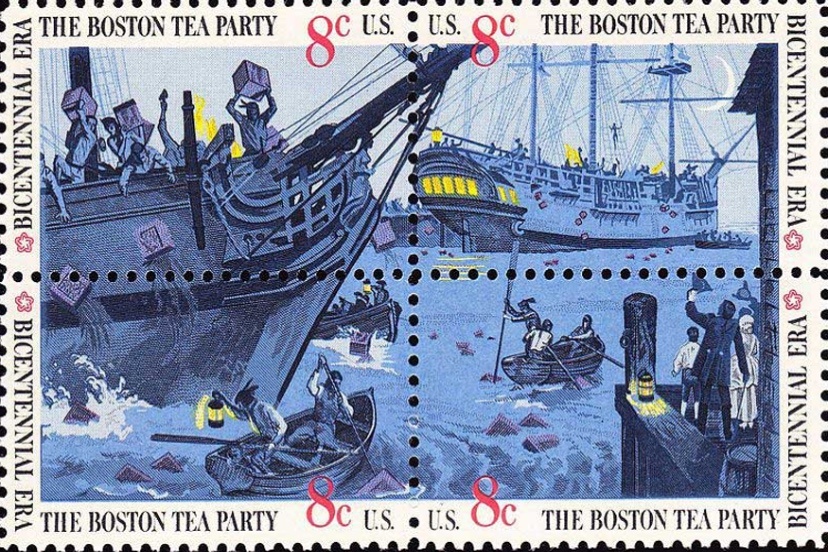
One potential problem with such a tax is similar to the problem that brought about the famous ‘Boston Tea Party’ and played a role in the American Revolution:
Taxation without Representation
A Town-only 1% sales tax can legally be approved by the 1,400 registered voters who live within the town limits. And the revenues would be spent by the Town Council, which is elected by those same town voters.
Only businesses located within the town limits would collect that tax. But nearly all of the sales-tax-collecting businesses that serve the Archuleta County community are located within the town limits. In essence, this proposed tax would be paid by all 14,500 community residents, as well as by visiting tourists, but the vast majority of people paying the tax would have no hand in electing the representatives in charge of spending the revenues.
Is this an ‘unethical tax’? Good question.
Since October, the overall condition of the town sewer system has been further analyzed, and the cost for the necessary repairs — plus the construction of a sewer treatment plant to replace the Town’s (absurd?) seven-mile sewer pipeline — is being advertised at “$80-100 million”.
On August 5, the Town Council voted unanimously to approve the first reading of Ordinance 1014, which you can download here.
An Ordinance of the Town of Pagosa Springs repealing Article 3, Chapter 16 of the Town of Pagosa Springs Municipal Code; calling an election on the question of imposing a one percent (1%) sales tax; and upon a favorable vote at the November 4, 2025 coordinated election, readopting Article 3, Chapter 16 to impose the sales tax.
Prior to that vote, Mayor Shari Pierce invited comments from the audience. I took her up on the invitation, as did my downtown neighbor, Greg Giehl. We both spoke in support of the sales tax, but we also questioned whether an independent campaign committee will have enough time, between August and November, to successfully promote the tax.
One of the practical political issues, which I mentioned to the Council, is the current ubiquity of social media.
In years past, political campaigns in Pagosa Springs depended heavily on newspaper advertising and bulk mailings, which typically required an organized campaign committee able to raise campaign contributions.
But during the recent political contest around the proposed Pagosa Lakes Property Owners Association (PLPOA) gymnasium project, I witnessed an effective negative campaign spring up and quickly spread almost entirely on Next Door and other social media websites… conducted at no cost whatsoever.
That negative campaign was able to help bring about the defeat the proposed gymnasium, by a 3-to-1 margin.
I suggested to the Council that they currently have no idea what shape a negative campaign — perhaps using social media and aimed at defeating the sales tax — might take.
What arguments might be successful at convincing town voters to vote ‘No’?
We don’t yet know what those arguments might be.
But back to the question of ‘taxation without representation’. This practice is already quite well established in our community. Both the Town and the County collect taxes from tourists — specifically, sales tax and lodging tax — without permitting those visitors to vote in our local elections. On top of that, a large number of our summertime residents happily enjoy Pagosa Springs for three or four months of the year, and pay property tax and sales tax without having any right to vote for our local government leaders.
In fact, the vast majority of Archuleta County residents are already helping to fund the Town government through their sales tax purchases, shared with the Town to the tune of $9 million per year, without any right to elect the Mayor or Town Council.
So in a sense, a proposed Town-only sales tax would be the continuation of a well-established pattern of ‘taxation without representation’.